 English
 русский
 Español
 عربى
Safety valve gas control pump accessories pressure regulator
Safety valve gas control pump accessories pressure regulator is a key component in the gas supply system. Its main function is to ensure the stable su...
See Details


Request a Quote
Content
A city gate station that takes gas at 24 bar and hands it to a medium pressure network at 1.6 bar will hold its setpoint all afternoon, then creep past 2.1 bar at three in the morning, when demand falls to a tenth of the design flow. That gap between the nameplate and the real operating band is why buyers stop ordering from catalogue rows and start specifying a custom adjustable high pressure natural gas regulator.
Catalogue regulators are sized around a single design point: one fixed spring, one fixed orifice, and a spring case nobody intended to re-range. In distribution work, most complaints that reach a manufacturer, such as hunting, creeping outlet pressure and torn diaphragms after two winters, trace back to a mismatch between the installed unit and the station's actual turndown band rather than to a manufacturing defect.
Jiangsu Changrun Intelligent Gas Equipment Co., Ltd. builds regulators, regulating boxes and gas parts on a 10,000 square metre site with five machining workshops, and more than half of its staff work in technical roles. That mix matters for custom work: a bespoke specification is only useful when the springs, diaphragms, bodies and the test bench that proves them all sit inside the same factory.
Above roughly 10 bar inlet, catalogue sizing breaks down, because the forces that wear a regulator scale with the pressure drop rather than with the nominal flow printed on the datasheet.
Drop 24 bar to 1.6 bar in a single stage and the gas crosses 22.4 bar. Two consequences follow. Joule-Thomson cooling removes roughly 0.5 degrees Celsius for every bar of drop on pipeline quality natural gas, so a warm summer inlet can pull the seat temperature below freezing, which is where hydrate and ice formation begins on wet gas. Velocity through the seat also rises with the square root of the drop, so a trim that is quiet at 4 bar is loud at 25 bar and erodes the plug within a season or two.
Sizing is the third issue. A regulator picked at 900 Nm3/h and installed on a line that runs at 40 Nm3/h for eighteen hours a day spends most of its life on the far edge of its characteristic curve, where droop is largest and seat wear is fastest.
One design point, one fixed spring range, standard bore. Setpoint drift between day and night flow is treated as normal behaviour and corrected with a screwdriver.
Sizing across the full turndown band, matched orifice, interchangeable spring ranges and a body rated for the coldest gas the site will ever see.
Three inputs settle almost the whole specification: inlet pressure range, turndown ratio, and the gas temperature reached after expansion.
Specify the maximum upstream pressure including upset and no-flow conditions, not the normal operating figure, then require a hydrostatic test at 1.5 times the maximum allowable working pressure. A high pressure regulating valve built for a 25 bar inlet typically uses a ductile iron or carbon steel body with a stainless trim. Above 40 bar the wall thickness, flange rating and bolting change the entire assembly, and the price changes with them.
Droop is the change in outlet pressure between minimum and maximum flow at a fixed spring setting, and its size depends almost entirely on the regulating principle. The figures below are typical for pipeline quality natural gas and are useful as design guidance rather than as guaranteed values.
Source: typical published regulator characteristics for natural gas service, used here as a comparison baseline.
If a station must stay inside a band of plus or minus 2 percent across a 20:1 turndown, a direct acting spring unit cannot deliver it. A balanced plug or pilot operated design can, and the price of that choice is a pilot line that needs its own filter and a slightly larger installation footprint.
Diaphragm and seal compounds set the low temperature limit more often than the metal does. Nitrile (NBR) covers roughly minus 20 to plus 80 degrees Celsius, EPDM is the better answer where the gas carries aromatic compounds, and fluoroelastomer (FKM) extends the top end to around 200 degrees Celsius but stiffens badly in deep cold. Where the calculated expansion temperature lands below minus 10 degrees Celsius, the practical options are a pre-heater upstream of the regulator or a two-stage reduction that splits the drop between two bodies.
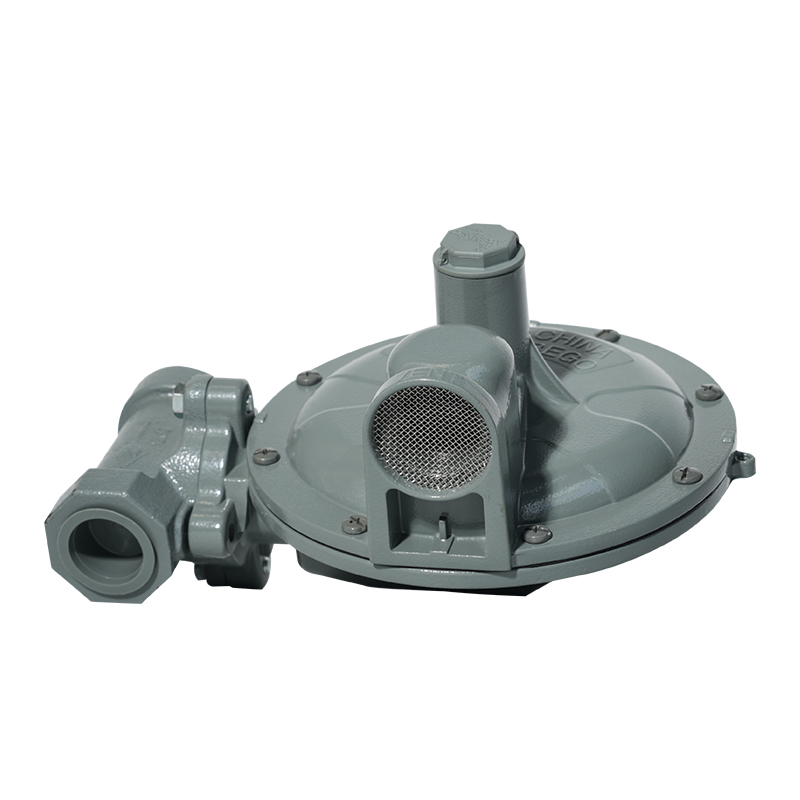 High Pressure Gas Pressure Regulator ValveKey gas-system component for regulating high-pressure gas to a stable supply; review when defining inlet, outlet, flow, temperature, and material requirements.View Product →
A custom regulator specification is complete only when five lines are filled in writing: inlet range, outlet range, flow band, gas temperature window and material class.
| Parameter | Typical custom range | What goes wrong when it stays open |
| Inlet pressure | 2 to 25 bar, hydro tested at 1.5x MAWP | Wrong spring rate, seat hammering on start-up |
| Outlet setpoint | 0.5 to 4.0 bar with a plus or minus 2 percent band | Hunting and pilot oscillation at low flow |
| Flow turndown | Up to 20:1 across the operating band | Night time droop and creeping outlet pressure |
| Gas temperature | Minus 20 to plus 60 deg C at the seat | Hardened diaphragm, ice forming at the orifice |
| Body and trim | Ductile iron, WCB carbon steel or CF8M stainless | Pitting, wall thickness loss, early seat wear |
| Seat leakage | Class VI per ANSI/FCI 70-2 | Slow pressure rise downstream of a closed regulator |
| Compliance | EN 334 for regulators, EN 14382 for safety shut-off devices | Equipment rejected at commissioning and handover |
Two of those lines cause most of the rework. Buyers routinely send a design flow instead of a flow band, and they send the normal inlet pressure instead of the maximum. Both values are easy to read off a station drawing, and both change the spring and the orifice that the factory has to fit.
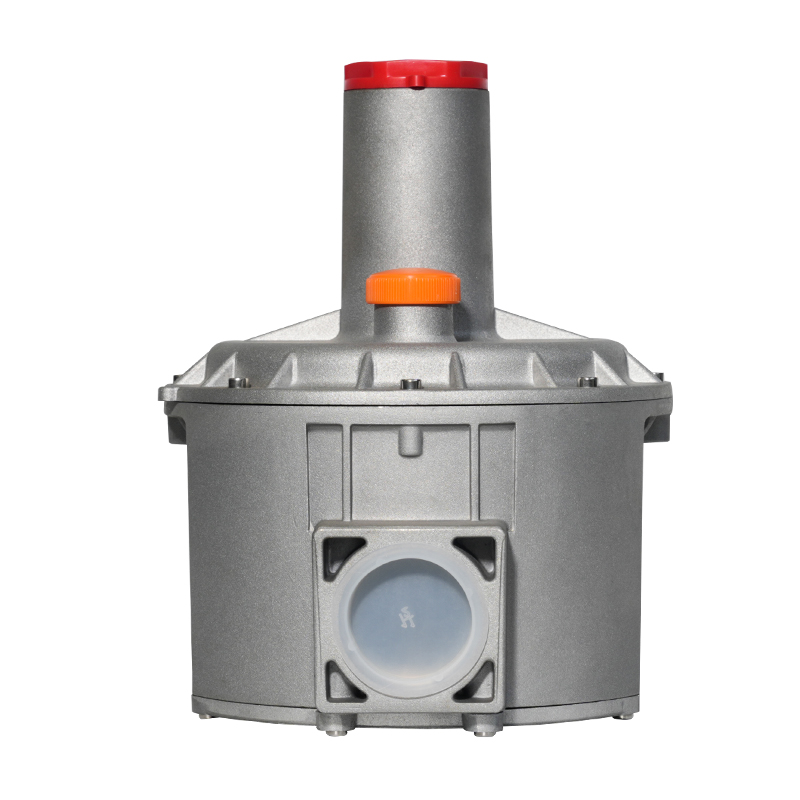 Natural Gas Pipeline Pressure RegulatorPressure-balance pipeline device for natural gas transportation; useful when flow band and maximum inlet pressure guide spring and orifice selection.View Product →
Adjustability pays off only when the setting procedure is written down, because most field problems come from a spring range that never bracketed the setpoint in the first place.
Where a project has to satisfy a documented standard, these checks belong in the handover file next to the pressure class and spring range. More detail on how custom builds are verified is covered in the notes on custom natural gas pressure regulator standards.
A pressure regulator controls pressure but does not protect the downstream system; overpressure protection is a separate layer that has to be sized for the failed-open case.
On a 25 bar inlet station feeding a 4 bar downstream main, that worst case flow is often two to three times the normal demand. It is the single number that decides the relief valve orifice, and it is also the number that decides whether a monitor plus slam-shut combination is cheaper than a large venting device.
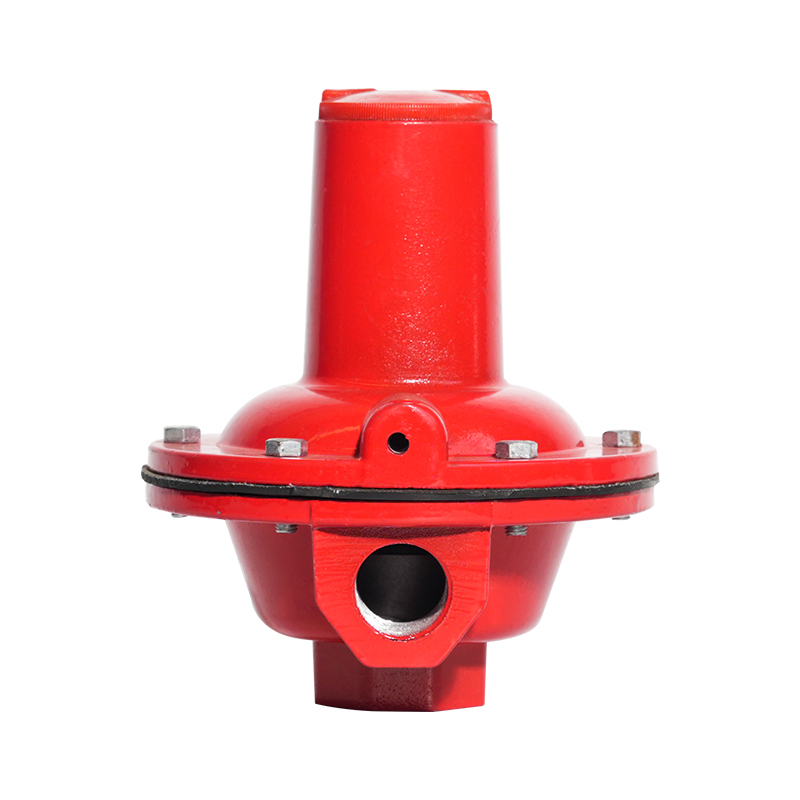 Gas Automatic Safety Relief ValveAutomatic gas relief valve for overpressure release; relevant when worst-case flow determines relief orifice size and relief versus monitor choices.View Product →
Yes, but not a direct acting spring unit. A balanced plug design holds roughly 5 percent droop across that band and a pilot operated design about 1.5 percent, while a catalogue direct acting regulator will typically move 10 to 15 percent between full flow and minimum flow. Match the regulating principle to the band before comparing prices.
Put the setpoint in the middle third of the spring range and leave room on both sides. For a 1.6 bar outlet, a 0.8 to 2.5 bar spring is a sound choice; a 1.0 to 1.8 bar spring is not, because seasonal trimming and the first winter of diaphragm settling will push a setpoint that starts near the top of its range outside the adjustable window.
Yes. The regulator is the control layer, and a monitor, a safety shut-off device or a full lift relief valve is the protection layer. Size the relief device for the flow a wide open regulator would pass with the upstream pressure at maximum, and confirm that the discharge point and vent stack sit outside the operator's working area.
Six values are enough for a firm answer, and each of them removes one round of back-and-forth:
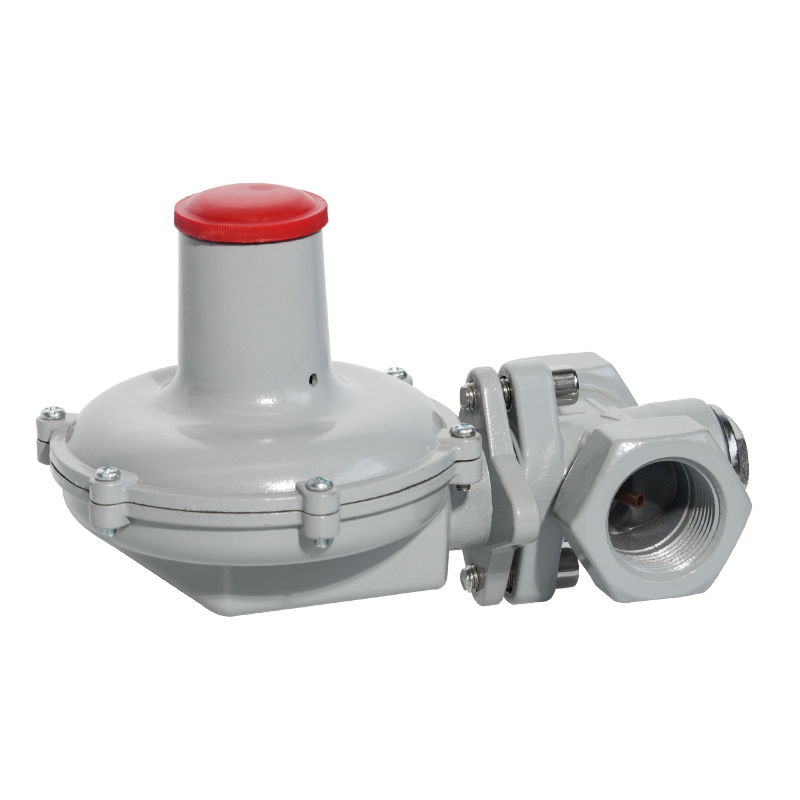
Safety valve gas control pump accessories pressure regulator is a key component in the gas supply system. Its main function is to ensure the stable su...
See Details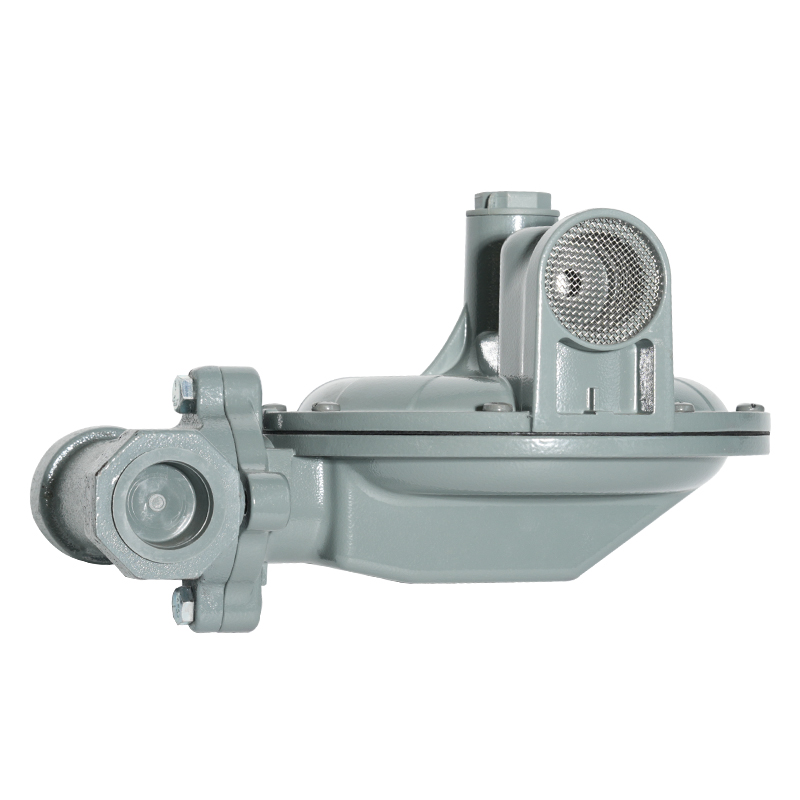
Safety valve gas control pump accessories pressure regulator is an indispensable key component in the gas system. As a protective device, the safety v...
See Details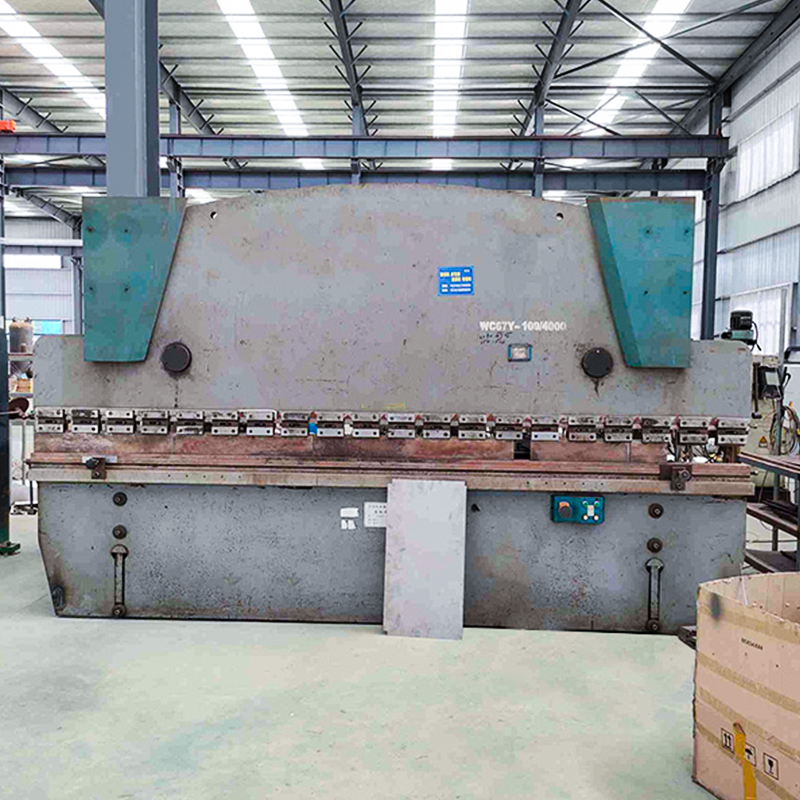
A liquefaction plant is a device that converts gas into liquid, especially in the production of liquefied natural gas (LNG). LNG plant specifically re...
See Details
The company is a manufacturer specializing in gas transmission and +distribution equipment and gas pressure regulators. It is a professional manufacturer integrating the research and development, design, manufacturing, marketing and after-sales service of gas equipment.
Phone: +86 138-5131-2088
Tel: +86 0515-83918669
Email: [email protected]
Add: No. 13, Yongchuang Road, Dazhong Industrial Park, Dafeng District, Yancheng City, Jiangsu Province, China
Copyright © Jiangsu Changrun Intelligent Gas Equipment Co., Ltd All Rights Reserved.
Custom Smart Gas Pressure Regulators Manufacturers, Suppliers
 Login
Contact Us