 English
 русский
 Español
 عربى
Industrial gas pressure regulator, pressure reducing valve, regulator
Industrial gas pressure regulating valve pressure reducing valve, pressure stabilizer is a device used to regulate and stabilize gas pressure. It can ...
See Details


Request a Quote
Content
A 500 kW dual-stage burner train was specified with a catalog regulator rated for 4 bar inlet and 50 mbar outlet. It held its setpoint within 3% at full fire and drifted 18% the moment the second stage cut out. Nothing was broken: the valve had been sized for the top of its flow range while the plant spent most of its life at the bottom. Custom pressure regulators are built for that gap, where the operating envelope rather than the catalog page sets the geometry.
Buying one is a specification exercise with fixed inputs, a product standard to satisfy and a verification trail to keep. The notes below follow the order we use with gas utility and industrial engineers before a single spring is wound.
A custom pressure regulator keeps the same casting family as the standard line and re-selects the parts that decide behaviour: orifice bore, trim, range spring, diaphragm and pilot ratio. That short list is where accuracy lives, and it is why a custom unit can hold a setpoint at 12% load that a catalog unit can only hold at 80%.
A custom pressure regulator is a pressure-reducing valve whose orifice, trim, range spring and sensing element are selected to meet a defined inlet pressure range, outlet setpoint band, minimum and maximum flow, and gas temperature and composition, then tested and documented against a product standard such as EN 334.
Most of the bill of materials stays standard. The engineering effort concentrates on a handful of variables that buyers can check directly:
Four numbers decide most of a custom regulator's behaviour: maximum inlet pressure, outlet setpoint with its permitted band, minimum and maximum flow, and gas temperature. Everything else is detail around them.
A custom regulator does not escape product standards: EN 334 governs performance and accuracy class, EN 14382 governs any over-pressure shut-off device fitted to it, ISO 4126-1 and API 520 govern relief sizing, and GB 27790-2011 governs town gas pressure regulators supplied into the Chinese market.
| Standard | What it governs | What to write into the order |
| EN 334 | Regulator performance, accuracy class AC, closing-pressure class SG | AC 10 and SG 20 measured across the stated inlet and flow band |
| EN 14382 | Safety shut-off devices for gas pressure regulating installations | Trip point, response time and reset method for the over-pressure cut-off |
| ISO 4126-1 | Safety valves and relief devices, sizing and discharge capacity | Rated capacity at 10% accumulation, plus the set pressure of the relief valve |
| GB 27790-2011 | Town gas pressure regulators for the Chinese distribution market | Class declaration, shell strength and external leakage limits |
| EN 1092-1 | Flange dimensions and pressure ratings | PN rating, face type and gasket form for the mating pipework |
The class you write into the order matters more than the model number. A unit declared AC 10 must hold outlet pressure within 10% of setpoint across the specified flow band and inlet range, and SG 20 caps the rise at zero flow. Both are measured values, not design intentions. Our reference on how custom natural gas pressure regulator standards are applied sets out the acceptance tests behind those figures.
A custom order rarely stops at the valve. The device that protects it is sized from the same envelope data, so specify both in the same document and avoid a second round of approvals later.
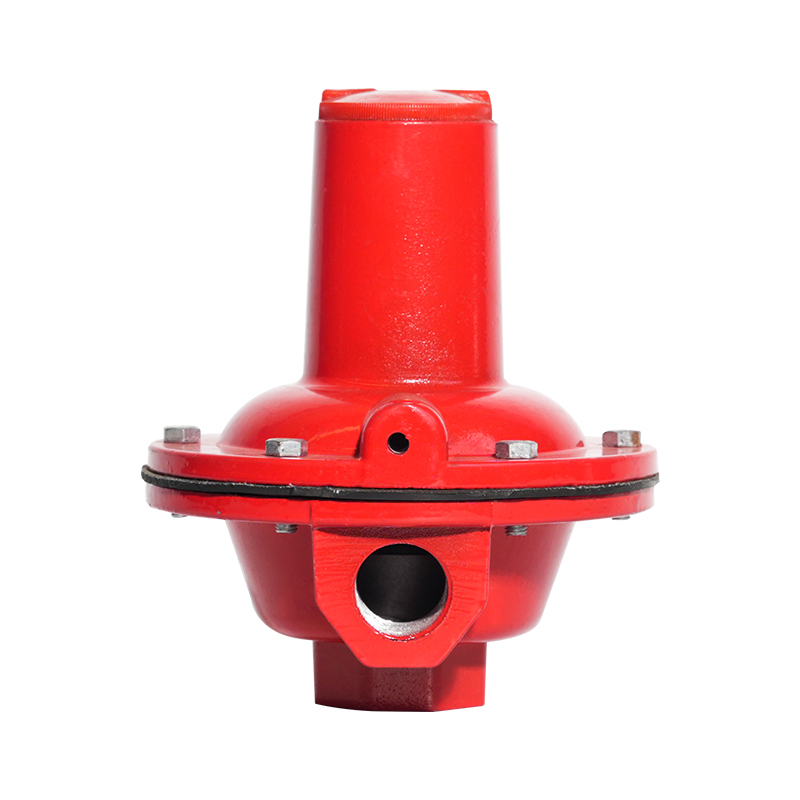 Gas Automatic Relief Valve for Overpressure ProtectionView this gas safety relief valve for automatic overpressure release, with RFZ models, a 2–200 KPa relief range, and Rc1–Rc2 connections.View Product →
Two numbers drive material selection: minimum metal temperature and gas composition. Everything below that is a cost decision, and getting the two numbers wrong costs a full re-trim rather than a spare part.
| Application | Inlet | Outlet setpoint | Body | Seal and seat |
| Building riser box | 0.1 - 0.4 MPa | 2.0 - 2.8 kPa | Ductile iron EN-GJS-400-18 | NBR diaphragm and seat |
| Commercial cabinet | 0.4 MPa | 5 - 30 kPa | Ductile iron, DN50 body | NBR, integral filter |
| Industrial burner train | 0.4 - 1.6 MPa | 20 - 100 kPa | Cast steel WCB | FKM for fast response |
| City gate station | 1.6 - 4.0 MPa | 0.1 - 0.4 MPa | Cast steel WCB | NBR or FKM plus monitor |
| CNG pressure regulating station | up to 25 MPa | 0.4 MPa | Forged steel or 316 | PTFE seat, multi-stage trim |
| LNG vaporizer outlet line | 1.6 - 4.0 MPa | 0.1 - 0.4 MPa | 316L for cryogenic trim | PTFE seat rated to -196 °C |
A custom regulator order passes five gates, and each one produces a document worth keeping. Skipping any gate moves the discovery to the commissioning week, where the correction is expensive.
One page covering inlet maximum and minimum, outlet setpoint and band, flow minimum and maximum, gas analysis, ambient range and the failure case. The buyer signs it, and it becomes the reference for every later argument.
The seat bore is chosen so the plug sits between roughly 20% and 80% of travel at both ends of the flow band. Any result below 10% travel at minimum flow is a re-selection, not a tuning problem to be solved on site.
Body, trim, diaphragm and flange pattern are released against the temperature and gas data, with a drawing review for sensing taps, vent lines and bypass. When the unit ships inside a walk-in enclosure, the gas pressure regulating cabinet is configured from the same envelope and tested as one assembly.
A static characteristic curve at five flow points and three inlet pressures, seat leakage measured against the class limit, and a shell test at 1.5 times design pressure. The curve, not the datasheet, is the acceptance record.
Batch curve checks, spring rate verification and weld inspection records retained against the serial number, so a unit pulled from a line after six years can still be traced to its original test data.
For plant and commercial supply duty across a 0.4 to 1.6 MPa inlet band, the workhorse is the industrial regulator family, where a balanced trim keeps outlet pressure steady as load swings through the day.
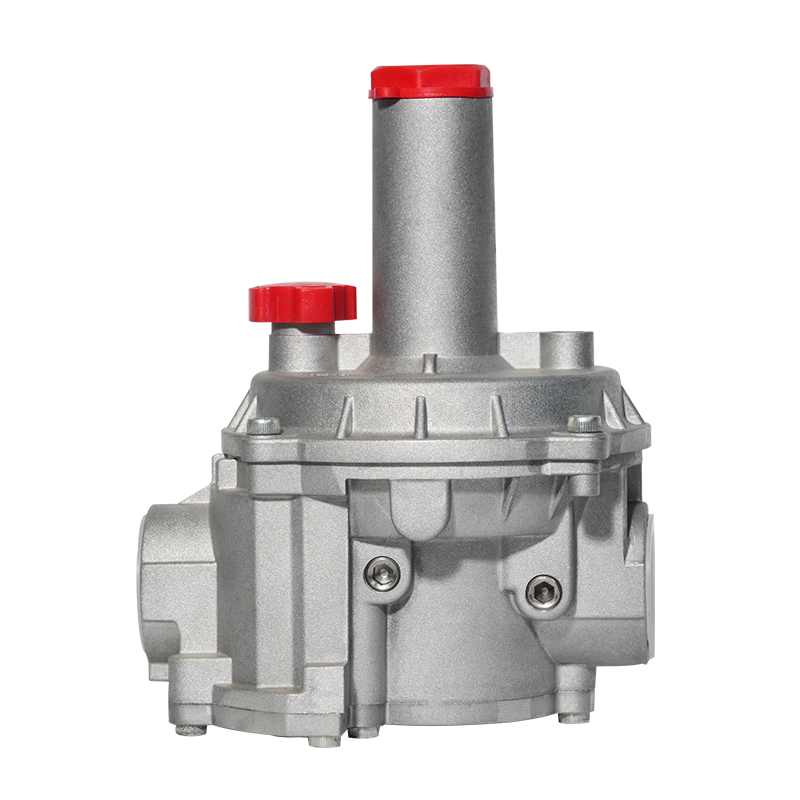 DDY15-100 Industrial Gas Pressure RegulatorReview the DDY15-100 regulator for industrial gas supply: it stabilizes outlet pressure as flow and pressure change, with 10–100 KPa inlet and 1.5–50 KPa outlet.View Product →
Above that band, city gate and CNG work moves to high-pressure bodies with multi-stage reduction, where the first stage absorbs the pressure drop and the second stage holds the setpoint.
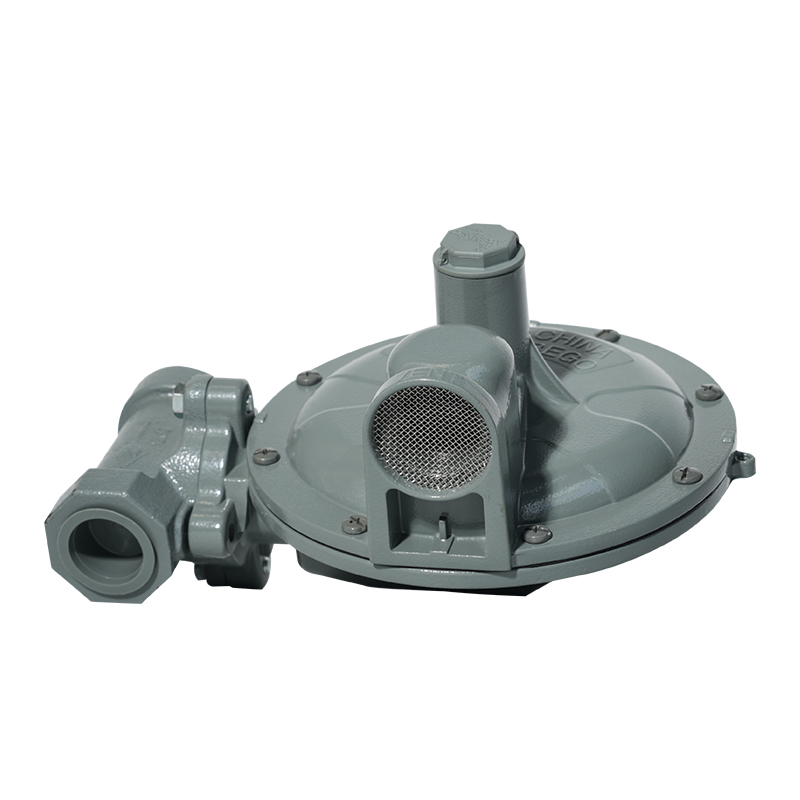 High-Pressure Gas Regulating Valve for Gas SystemsExamine this high-pressure regulating valve, presented as a key gas-system component that adjusts high-pressure gas for stable, safe supply; no technical parameters are listed.View Product →
For a custom regulator, the measured curve is part of the product. Without it the unit cannot be verified in the field, and any later drift has no baseline to be compared against.
This is where in-house benches separate a real custom supplier from an assembler. Jiangsu Changrun Intelligent Gas Equipment Co., Ltd. runs its own static characteristics test bench, spring testing machine, film high and low temperature box for diaphragm material and an X-ray inspection room for weld quality, which is how a serial unit can be traced back to a measured curve rather than a calculated one.
The extra cost of a custom build is engineering and test time, not exotic hardware. Most of the bill of materials is shared with the standard line, so the premium tracks hours on the bench and documents in the file.
Price the two options over a ten-year window rather than a purchase order. A unit that cycles at low load consumes seat and diaphragm life faster than a correctly trimmed one, and the replacement cost usually lands outside the capital budget that justified the cheaper choice.
Size on the minimum controllable flow first and confirm capacity afterwards. A pilot-operated body held at a 20:1 turndown keeps the plug above 20% travel from 10% to 100% of rated capacity, while a direct-acting DN25 body manages about 5:1 before the seat begins to chatter.
Yes. Accuracy class AC and closing-pressure class SG apply to the finished assembly regardless of how it was engineered. An AC 10 and SG 20 declaration is measured on the static characteristic bench across the specified inlet and flow range, and it must be repeated on the serial unit rather than on the prototype alone.
Four as a minimum: the measured static characteristic curve at three inlet pressures and five flow points, material certificates to EN 10204 3.1, the pressure test record at 1.5 times design pressure, and the sizing sheet for the relief valve or shut-off device with its set points.
When the flow band stays between 30% and 100% of rated capacity, the inlet varies by less than 20%, and the permitted outlet band is wider than 15% of setpoint. Outside those three conditions a standard unit typically works on commissioning day and drifts within the first season.
Custom pressure regulators are judged in year three, not on the commissioning sheet. The unit that earns its price is the one whose curve still matches the file after a decade of load swings, gas quality changes and the occasional upstream upset, and that outcome is decided long before production, in the four numbers written on the envelope review page.
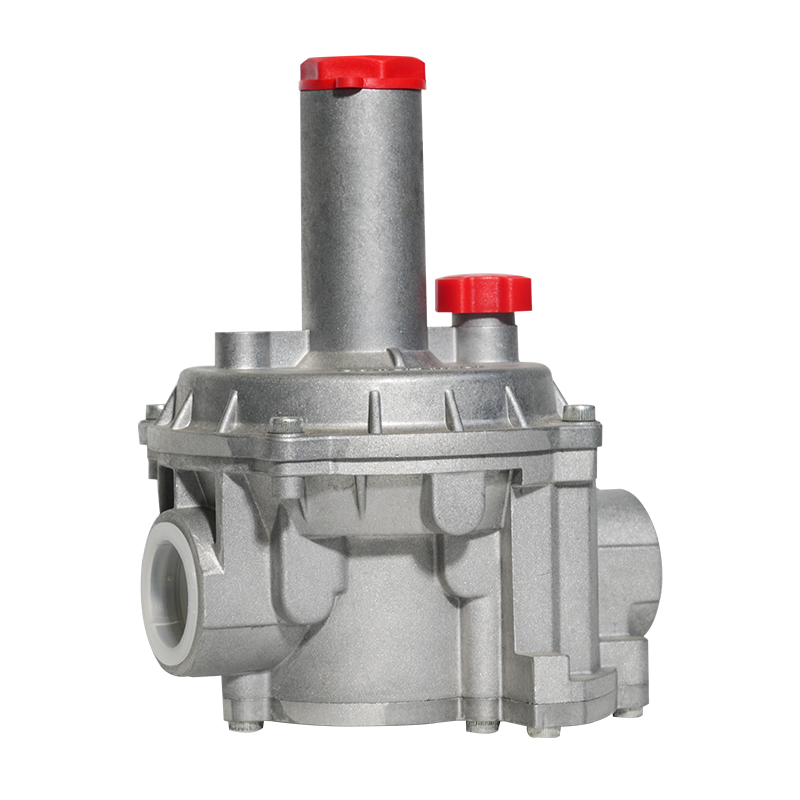
Industrial gas pressure regulating valve pressure reducing valve, pressure stabilizer is a device used to regulate and stabilize gas pressure. It can ...
See Details
Spring testing machines are instruments that are specially used to test springs. Their main function is to perform strength tests and analyses on vari...
See Details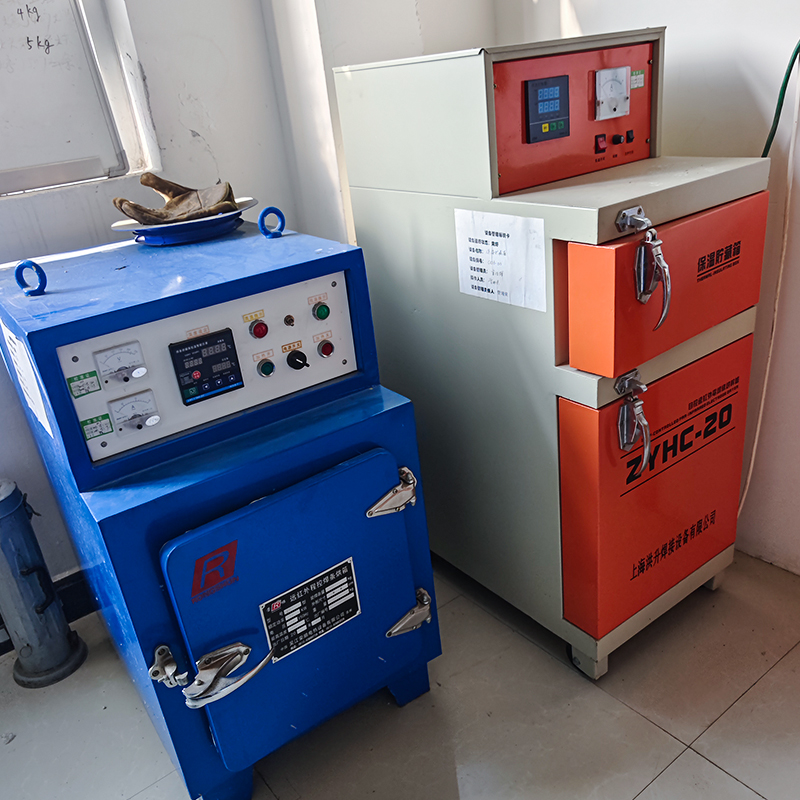
The welding rod baking and insulation box is an important equipment in welding engineering, mainly used for drying and heat preservation of welding ro...
See Details
The company is a manufacturer specializing in gas transmission and +distribution equipment and gas pressure regulators. It is a professional manufacturer integrating the research and development, design, manufacturing, marketing and after-sales service of gas equipment.
Phone: +86 138-5131-2088
Tel: +86 0515-83918669
Email: [email protected]
Add: No. 13, Yongchuang Road, Dazhong Industrial Park, Dafeng District, Yancheng City, Jiangsu Province, China
Copyright © Jiangsu Changrun Intelligent Gas Equipment Co., Ltd All Rights Reserved.
Custom Smart Gas Pressure Regulators Manufacturers, Suppliers
 Login
Contact Us