 English
 русский
 Español
 عربى
PN16 DN50/DN80 flanged ductile iron Y-type strainer
PN16 DN50/DN80 flange ductile iron Y-type filter valve is a flange-connected ductile iron Y-type filter valve. PN16 means the nominal pressure is 1.6M...
See Details


Request a Quote
Content
An industrial LNG pressure reducing regulator factory delivers an assembled pressure control package that takes regasified LNG from storage or pump pressure, normally 4 to 25 bar gauge, down to a utilization pressure between 0.5 and 4 bar gauge for burners, kilns and filling operations, while holding outlet pressure inside a declared accuracy class across the full flow range.
The scope usually covers four items that must arrive together: the regulator body with its pilot or loading system, the safety shut-off device, the safety relief valve and the filter ahead of the seat. On an LNG station the regulator sits downstream of the vaporizer, so the gas it actually sees is close to ambient temperature. The cryogenic work happens upstream, in the tank, the pressure build-up vaporizer or cryogenic pump, and the vaporizer itself.
That split matters at quotation stage. A factory that builds both the cryogenic side and the regulating side ships one skid with one set of test records. A factory that builds only the regulator hands you a valve that must be matched to another supplier's vaporizer, and the interface becomes your problem at commissioning.
A correctly designed LNG supply train lowers pressure in five stages rather than in one jump, and any factory that quotes a single-stage reduction from 25 bar to 1 bar should be asked how it handles cooling, noise and lock-up.
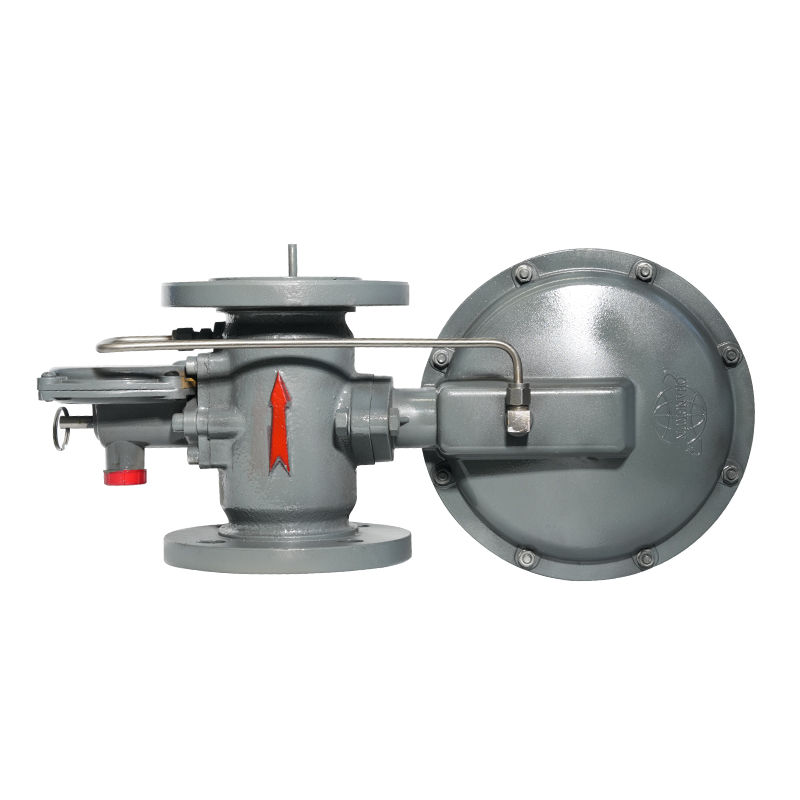 Industrial LPG Pressure Regulator, High- and Low-Pressure TypesIndustrial LPG pressure regulator, available in high- and low-pressure types, maintains stable downstream pressure as flow and upstream pressure fluctuate.View Product →
Insulation on the low-pressure pipework, a downstream superheater, or both, keeps the gas 5 kelvin above its dew point at the burner inlet. Skipping that detail is the most common reason a regulator ices on the outside during its first winter.
A factory can return a firm quotation in one working day when the enquiry carries six numbers: inlet pressure range, outlet set point with tolerance, minimum and maximum flow, gas temperature at the regulator inlet, nominal pipe size and the shut-off class required.
| Parameter | Typical value | What it decides |
| Inlet pressure | 4 to 25 bar gauge | Body rating, diaphragm case and spring range |
| Outlet pressure | 0.5 to 4 bar gauge, within 5 percent | Accuracy class and pilot type |
| Flow range | minimum, normal, maximum in Nm3/h | Seat size and turndown |
| Inlet temperature | 5 to 20 degrees Celsius | Seal material and trim specification |
| Nominal size | DN25 to DN100, PN16 or PN25 | Flange pattern and casting choice |
| Shut-off class | EN 12266-1 rate A or rate B | Metal seat against soft seat |
| Body material | ASTM A351 CF8M with 316L trim | Gas quality and site corrosion class |
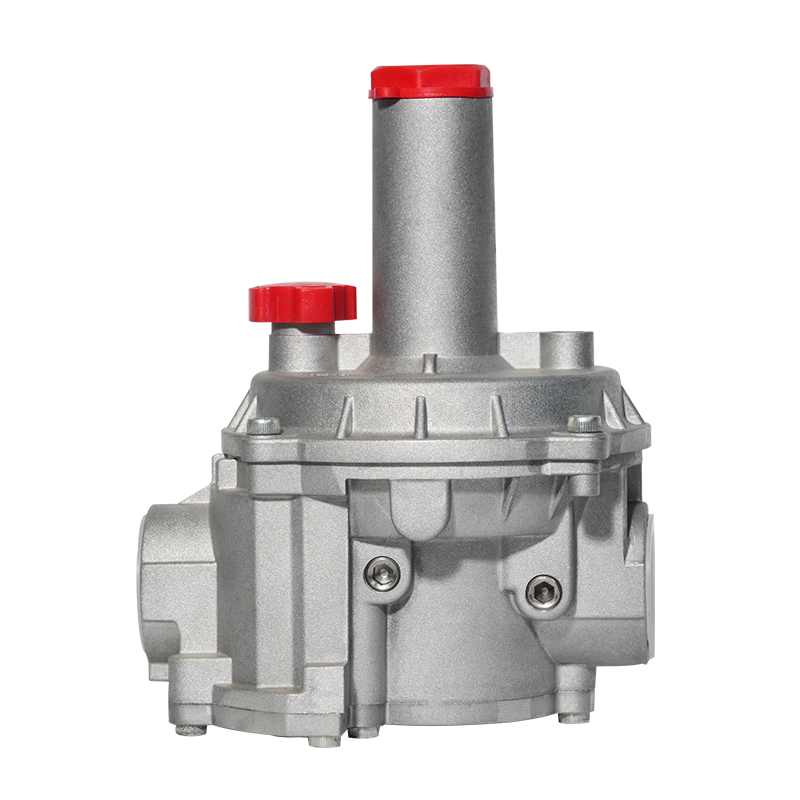 Industrial Gas Pressure Regulator DDY15-100Pressure-reducing valve for industrial gas supply that stabilizes outlet pressure as flow and inlet pressure change, with flow rate listed at 5–5000 Nm3/h.View Product →
Quote the turndown you need as a ratio, not as a wish. A body that holds 5 percent accuracy at 60 percent of rated flow may hold only 12 percent at 8 percent of rated flow, and that is the point where a burner flame becomes unstable on a night shift.
Annual output above 10,000 units, a 10,000 square metre site and five machining workshops describe a factory that machines its own bodies, plugs and stems rather than assembling imported kits behind a local nameplate.
Jiangsu Changrun Intelligent Gas Equipment Co., Ltd. publishes those figures: 10,000 square metres of floor space, registered capital of 50 million CNY, total assets of 200 million CNY, more than 10,000 regulators and gas equipment units produced per year, annual sales above 100 million CNY, and a technical staff share of 56 percent across a team of more than 30 people. The company runs nine departments, including technology, product development, process, production, supply, quality inspection and marketing, and lists CNC machining and AutoCAD design as standard engineering tools.
Capacity figures also set expectations on lead time. A plant producing more than 10,000 units a year can absorb a standard DN50 regulator into a running schedule, but an engineered LNG skid with vaporizer, slam-shut and control panel is built to order, so ask for the written date of the factory acceptance test rather than the shipping date.
Three parts decide regulator life: the diaphragm, the seat and the spring, and a factory that tests all three on its own benches controls the failure rate that the buyer otherwise discovers in year two.
A static characteristic test bench plots outlet pressure against flow from zero to maximum and records lock-up, the rise in outlet pressure when flow stops. A spring testing machine checks the reference force the whole control loop depends on, because a spring that loses 3 percent of its rate shifts outlet pressure by 3 percent. A film high and low temperature box ages elastomer diaphragms across the operating range before they are built into a unit.
On the cryogenic side, bodies and trim are cast in ASTM A351 CF8M or CF3M and impact tested at minus 196 degrees Celsius to ASTM E23, welds are radiographed, and 316L parts are checked by positive material identification. Material selection for cold service is covered in more detail in this note on material grades for cryogenic LNG applications.
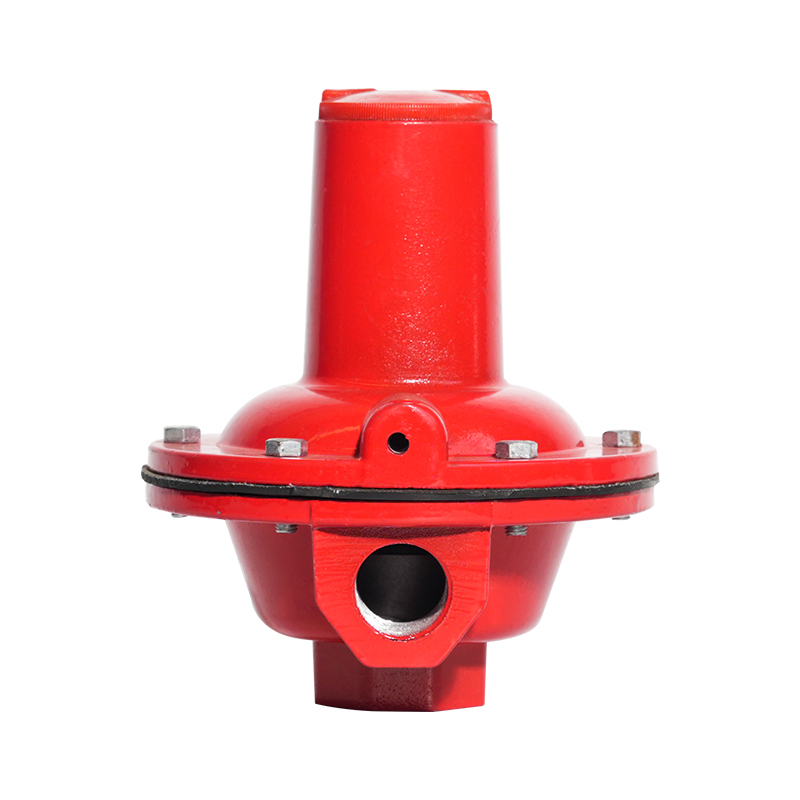 Gas Automatic Relief Valve for Overpressure ProtectionSafety relief valve that opens automatically when system pressure exceeds the set value, releasing excess gas; relief range 2–200 kPa across three models.View Product →
Overpressure protection belongs in the same enquiry. A regulator that fails closed protects the downstream line, but a regulator that fails open needs a safety relief valve sized to the full inlet flow, and ISO 4126-1 sizing is not something to leave until installation week.
A factory issues a heat number, a per-unit characteristic curve and a spare-parts list; an assembler issues a catalogue page and a delivery promise, and the five checks below separate the two in a single supplier visit.
EN 334 sets accuracy classes from AC 1 to AC 15, meaning plus or minus 1 percent to plus or minus 15 percent of outlet set point. Premix burners and burner trains normally specify AC 5 or AC 2.5, while AC 10 is acceptable on a plant header where downstream equipment has its own control loop.
EN 334 covers the regulator, EN 14382 the safety shut-off device, ISO 4126-1 the safety relief valve, ASME B31.3 the process piping and GB 50028 the city gas installation code used on Chinese projects. Ask for the edition of each standard, not only the number, because revisions change the test procedure.
A shell test at 1.5 times design pressure, a seat leak test at 1.1 times design pressure to EN 12266-1 rate A or rate B, set-point verification at three flow points and a slam-shut trip repeated three times. Every record should carry the unit serial number, the bench number and the test date.
Keep the gas at least 5 kelvin above its hydrocarbon dew point at the seat, by reheating ahead of the second stage, insulating the low-pressure pipework, or both. Below that margin hydrates form on the plug, outlet pressure starts to hunt, and the downstream burner sees a flame that will not hold.
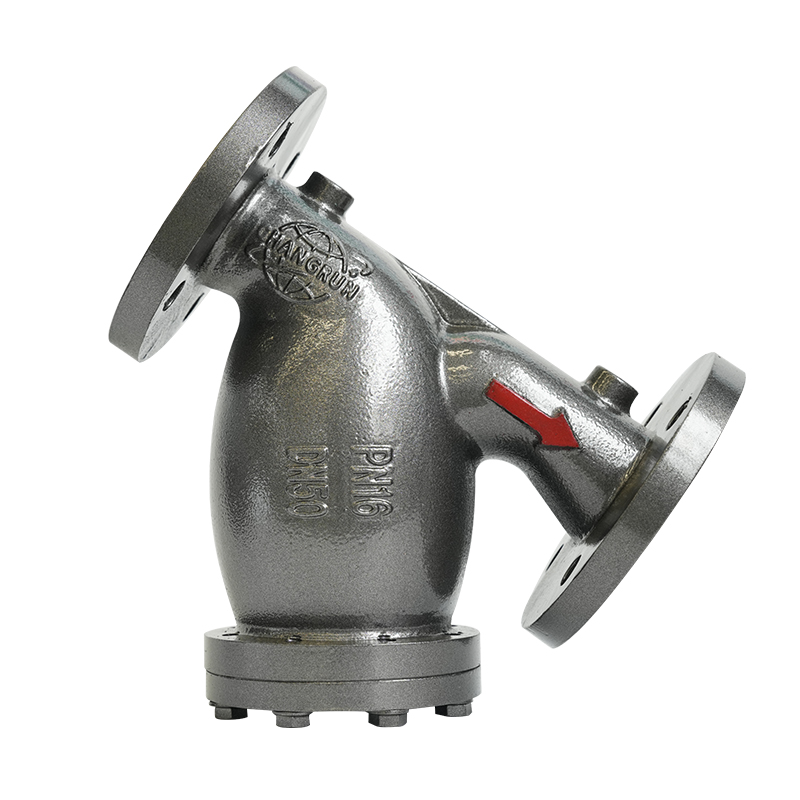
PN16 DN50/DN80 flange ductile iron Y-type filter valve is a flange-connected ductile iron Y-type filter valve. PN16 means the nominal pressure is 1.6M...
See Details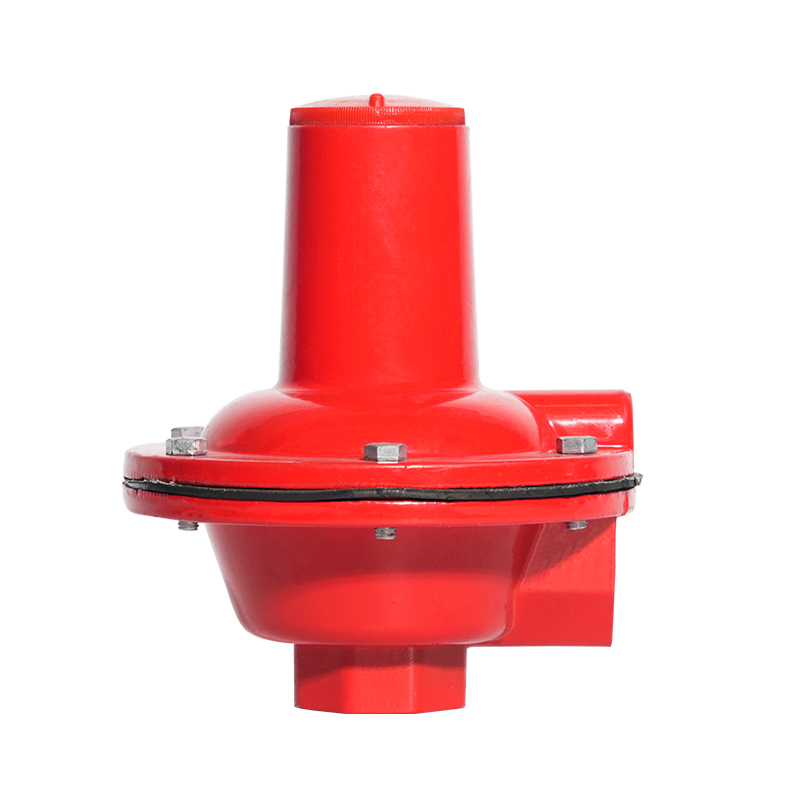
The automatic gas relief valve is a safety device used to adjust the pressure in the gas system to ensure the stable operation of the system. The valv...
See Details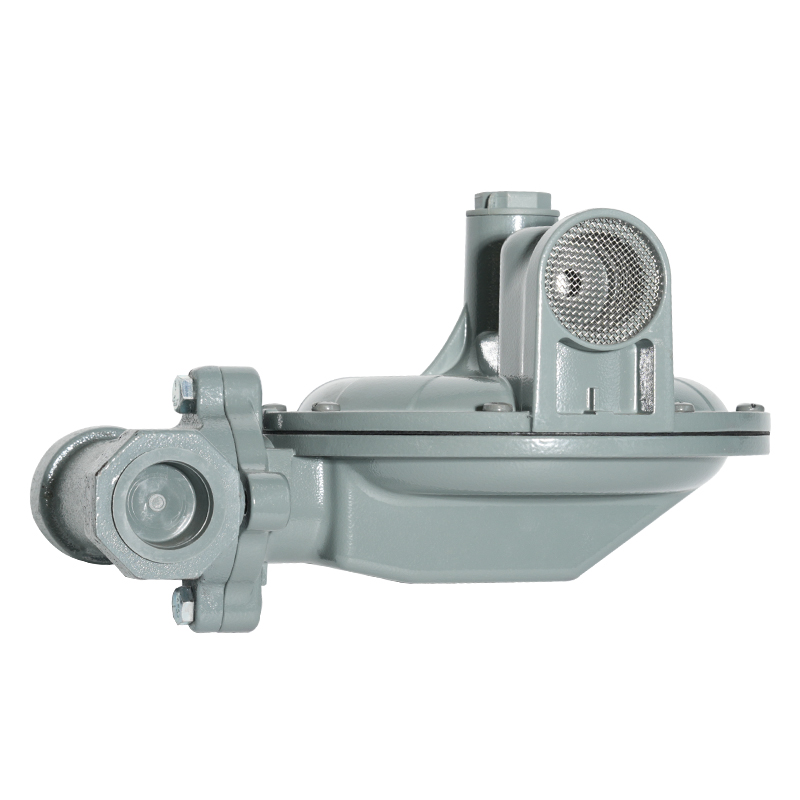
Safety valve gas control pump accessories pressure regulator is an indispensable key component in the gas system. As a protective device, the safety v...
See Details
The company is a manufacturer specializing in gas transmission and +distribution equipment and gas pressure regulators. It is a professional manufacturer integrating the research and development, design, manufacturing, marketing and after-sales service of gas equipment.
Phone: +86 138-5131-2088
Tel: +86 0515-83918669
Email: [email protected]
Add: No. 13, Yongchuang Road, Dazhong Industrial Park, Dafeng District, Yancheng City, Jiangsu Province, China
Copyright © Jiangsu Changrun Intelligent Gas Equipment Co., Ltd All Rights Reserved.
Custom Smart Gas Pressure Regulators Manufacturers, Suppliers
 Login
Contact Us