 English
 русский
 Español
 عربى
Gas automatic relief valve, gas relief valve, safety relief valve
The automatic gas relief valve is a safety device used to adjust the pressure in the gas system to ensure the stable operation of the system. The valv...
See Details


Request a Quote
Content
A custom gas pressure regulating device order often arrives as one line in an email: 4.0 MPa inlet, 0.4 MPa outlet, 8,000 Nm3/h peak flow. That line fixes a duty point. It does not fix the decisions that determine whether the assembly holds set point on a cold morning, passes the buyer's acceptance test, and stays inside its shutoff class after twenty thousand cycles.
Jiangsu Changrun Intelligent Gas Equipment Co., Ltd., a gas transmission and distribution equipment manufacturer working from a 10,000 square metre plant, builds regulators, regulating boxes, regulating cabinets, safety relief valves and the test benches that verify them. That makes the factory side of a custom order concrete enough to describe step by step: what the datasheet has to contain, how the body class follows the pressure grade, and which records a buyer should demand before the unit leaves the shop.
A custom gas pressure regulating device is an assembly, not a component: regulator body and trim, filter, slam-shut or safety shutoff valve, relief valve, isolation valves, gauges, and where the duty requires it a heat exchanger and remote telemetry, all built around a specified inlet and outlet pressure pair, flow envelope and shutoff class rather than selected from a catalogue page.
Custom means the design is fixed by a datasheet, not by a catalogue: inlet pressure, outlet pressure band, minimum and maximum flow, medium, temperature and shutoff class are agreed in writing before the first casting is machined.
Factories use the word for three different levels of work, and mixing them up is the usual source of price and schedule disputes:
A datasheet carrying only a nominal inlet and outlet pressure leaves the factory guessing, and the guess fails at minimum flow rather than at maximum flow. Six values carry nearly all of the design weight.
Write the minimum flow on the datasheet. Once a seat is oversized for light load, no spring adjustment removes the hunting, and the fix becomes a new trim set rather than a site adjustment.
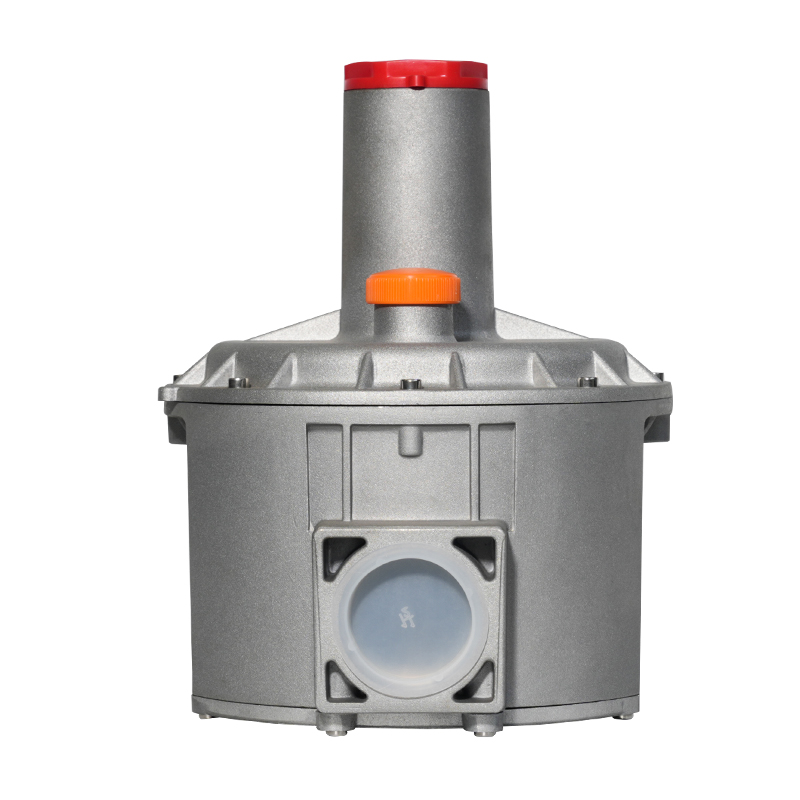 Natural Gas Pipeline Pressure RegulatorPipeline regulator uses internal pressure balance to stabilise gas pressure; review inlet-effect and minimum-flow details when selecting trim for the duty.View Product →
For pipeline duty in the medium and high pressure bands, the body is normally specified with a balanced trim so that inlet pressure swings move the outlet pressure by a few kilopascals rather than tens of kilopascals. Ask for the inlet-effect figure as a number, not as a statement that the regulator is balanced.
GB 50028-2006 divides town gas pipelines into seven pressure grades, and the grade at the regulator inlet, not the burner pressure, sets the body class, flange rating, test pressure and inspection level.
Bars are drawn to a 4.0 MPa full scale; the low pressure band is shown at a minimum visible width because 0.01 MPa would otherwise render as a single pixel.
A city gate handing gas from a 4.0 MPa high pressure A line into a 0.4 MPa medium pressure A network is asking one body to cover a 10:1 reduction with a tight outlet band. That duty is normally split: a high pressure regulator in the gate station, then a second stage at the district regulating cabinet, with the intermediate pressure chosen so both stages sit inside their comfortable range.
The same logic runs at the other end of the network. A wall-mounted building regulator box serving a single riser works in the 0.2 to 0.4 MPa band and reduces to roughly 2 kPa at the meter, so its diaphragm area and seat diameter are sized for a flow measured in tens of cubic metres per hour, not thousands.
 Natural Gas Pressure Regulating Equipment BoxCompact regulating cabinet integrates filtration, pressure regulation, metering and safety shut-off/relief; suits system pressure control where staged reduction and downstream protection are needed.View Product →
Any reduction that takes the gas close to its water or hydrocarbon dew point must be split into two stages or heated; natural gas cools by roughly 0.4 to 0.5 K per bar of pressure drop across a regulator, so a single 4.0 MPa to 0.4 MPa step removes 14 to 18 K from the gas stream.
That cooling does not stay in the pipe. Water vapour condenses first, then freezes on the seat and the cage, and the regulator begins to creep open or lock shut. Diaphragms stiffen, spring rate changes, and the outlet pressure that was stable in September sits ten percent higher in January.
Two stages, one heater and a correctly sized relief valve cost less than a single stage that ices at 4 a.m. in February and takes the district offline with it.
The staged layout and the anti-freeze measures around it are covered in more detail in this note on multi-stage gas pressure regulating and freezing prevention, including where the heat exchanger belongs relative to the slam-shut valve.
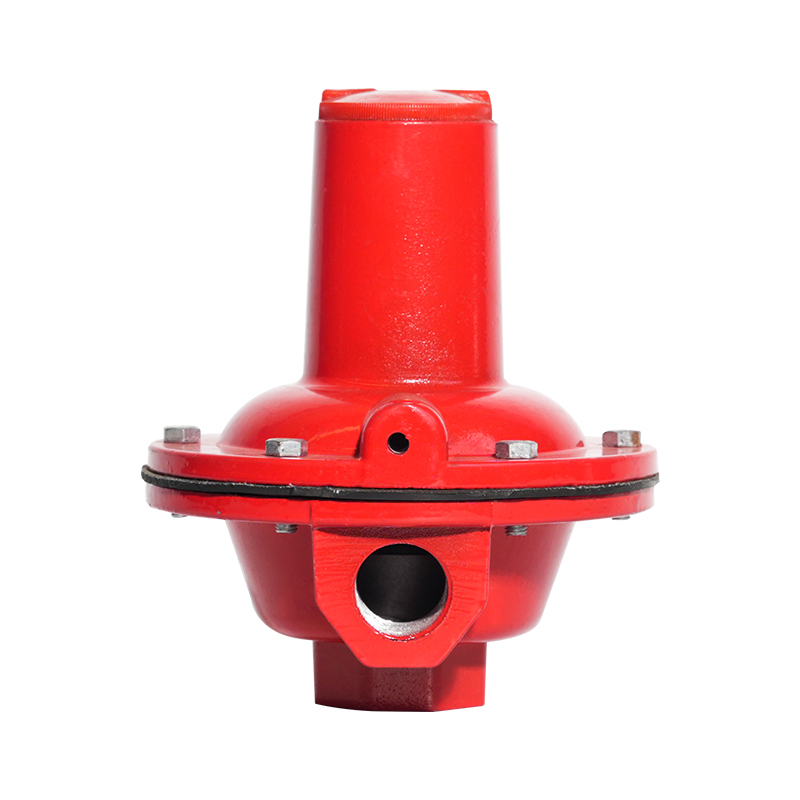 Gas Automatic Safety Relief ValveAutomatic relief valve opens on overpressure to release excess gas; check set pressure and reseat behaviour against regulator lockup and downstream design limits.View Product →
Overpressure protection is the one part of the assembly that is specified by what happens when everything else fails. Set the relief valve above the regulator's lockup rise and below the downstream design pressure, then verify the reseat pressure on the bench, because a valve that reseats too high will keep weeping gas to atmosphere.
On a custom order the acceptance evidence carries as much weight as the hardware; a factory that can show the bench behind each number is easier to audit than one that issues only a certificate of conformity.
| Parameter | Typical custom specification | How it is verified |
| Body and trim material | WCB carbon steel for high pressure duty, 304 or 316 stainless for corrosive or low temperature service, ductile iron below 0.4 MPa | Mill certificates traced to heat numbers, positive material identification on stainless parts |
| Diaphragm and seat elastomer | NBR for minus 20 to 60 C, FKM for higher temperature, low temperature compound for minus 40 C service | Batch hardness check plus a film high and low temperature test box |
| Outlet accuracy | Plus or minus 5 percent of set point between 10 and 100 percent of rated flow | Static characteristics test bench with a recorded pressure curve across the flow range |
| Shutoff class | SG 5 or SG 10 to EN 334, chosen by the hazard downstream rather than by habit | Pressure decay or bubble test on a closed seat at rated inlet pressure |
| Spring rate | Plus or minus 3 percent of nominal rate measured at the working length | Spring testing machine with a load-deflection log attached to the serial number |
| Pressure-retaining welds | Full penetration on every seam carrying gas pressure | Radiography in an X-ray inspection room to GB/T 3323.1, with film retained |
The bench list matters more than the brochure. A static characteristics test bench plots outlet pressure from minimum to maximum flow in one pass, a spring testing machine converts a vague claim about set-point stability into a load-deflection curve, and a film high and low temperature box shows what the diaphragm does at the temperature printed on the datasheet. Where the standard is contractual rather than assumed, the requirements are usually written into the purchase order as a named document; the custom natural gas pressure regulator standards note walks through which clauses carry the most weight.
A custom regulating device that arrives wrong is nearly always a specification that omitted a boundary condition; adding eight lines to the enquiry removes most of that risk.
Ask for the raw acceptance charts, not a summary table. The curve shows whether the outlet pressure was still moving when the technician wrote the number down.
Nearly all of the risk in a custom order is settled before the purchase order is issued and then reappears later as a delivery argument. Four questions cover the parts of the datasheet that are usually left blank.
A custom regulator passes five gates before shipment: drawing approval, material certification, machining and welding, assembly with set-point trimming, and the witnessed acceptance test. The gate that slips is usually material certification on stainless trim, not machining, so the schedule question worth asking is which material lots are already in stock.
No. Shutoff class ranks how much gas may pass a closed seat, and SG 5 to EN 334 is considerably tighter than SG 20. A tighter seat needs finer filtration upstream and a better machined seating surface, so on a line with a coarse filter the tighter class simply transfers the leakage problem to the filter housing.
Yes, when the new duty stays inside the body's pressure class and inside a practical turndown of roughly 20 to 100 percent of the original rated flow. Beyond that band the seat, plug, spring and often the body all change, and the unit becomes a custom build by any definition.
Four records: the outlet pressure curve from minimum to maximum flow, the lockup rise measured after shutoff, the relief valve set and reseat pressures, and the radiography report on pressure-retaining welds to GB/T 3323.1. Hold the shipment until all four are signed.
A custom regulating device is a datasheet with hardware attached. Fix the boundary conditions in writing and the factory can defend the design, the bench data and the delivery date with the same set of numbers.
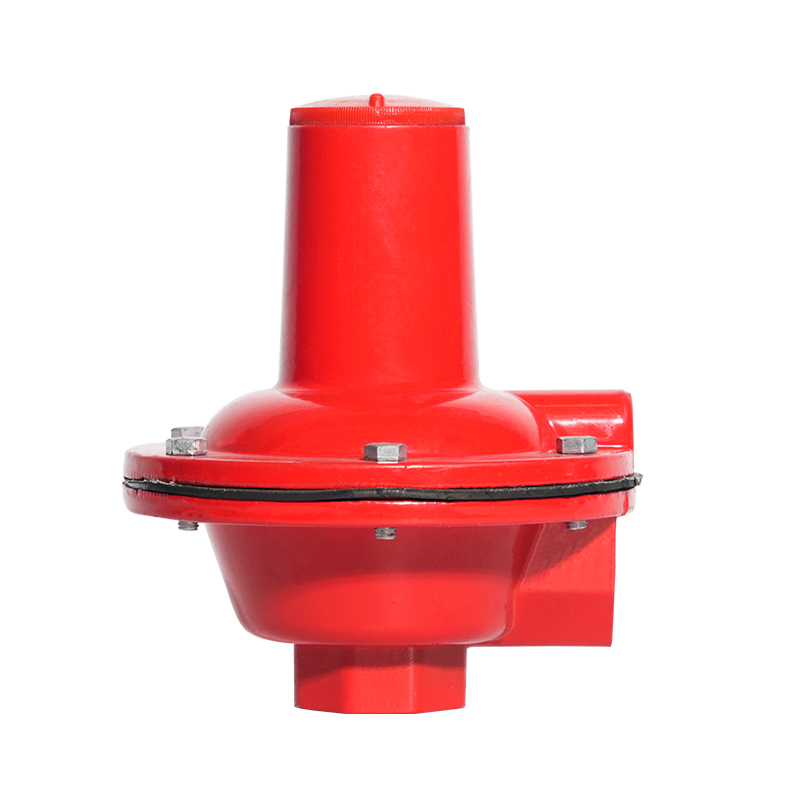
The automatic gas relief valve is a safety device used to adjust the pressure in the gas system to ensure the stable operation of the system. The valv...
See Details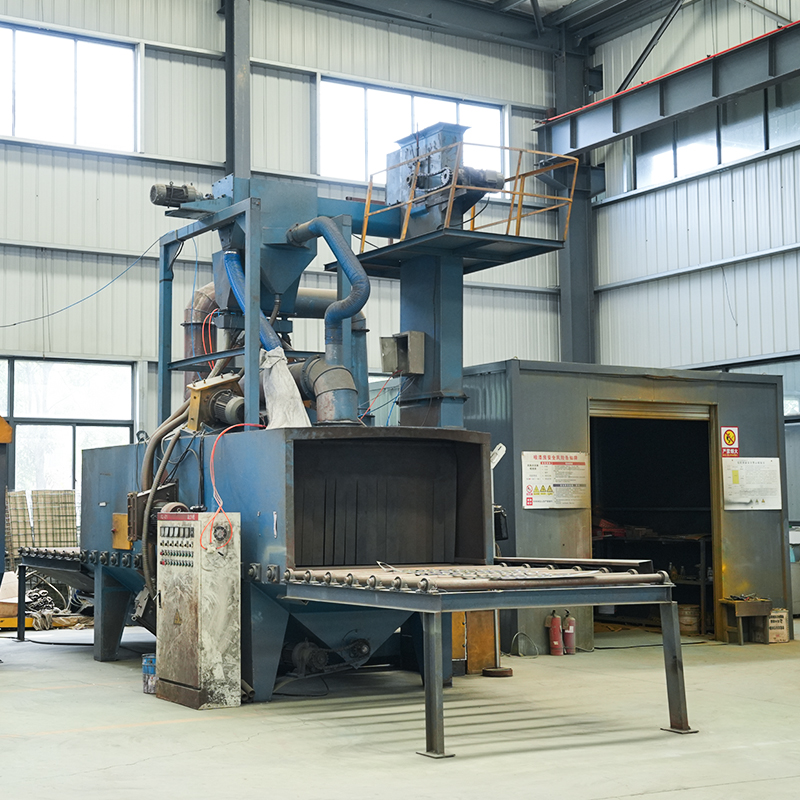
The through-type shot blasting machine is an efficient and automated machine and equipment, which is specially used for continuous through-type descal...
See Details
Natural gas/LPG gas generator is a device specially used to convert natural gas or LPG into electrical energy. The device connects the engine and the ...
See Details
The company is a manufacturer specializing in gas transmission and +distribution equipment and gas pressure regulators. It is a professional manufacturer integrating the research and development, design, manufacturing, marketing and after-sales service of gas equipment.
Phone: +86 138-5131-2088
Tel: +86 0515-83918669
Email: [email protected]
Add: No. 13, Yongchuang Road, Dazhong Industrial Park, Dafeng District, Yancheng City, Jiangsu Province, China
Copyright © Jiangsu Changrun Intelligent Gas Equipment Co., Ltd All Rights Reserved.
Custom Smart Gas Pressure Regulators Manufacturers, Suppliers
 Login
Contact Us