


 English
 русский
 Español
 عربى
عربىWhat a Natural Gas Pressure Regulator Actually Does
Gas utility lines typically deliver natural gas at pressures between 0.25 PSI and 60 PSI depending on the pipeline stage. Your stove, water heater, or furnace is engineered to operate at a fraction of that — usually 3.5 to 7 inches WC (roughly 0.13 to 0.25 PSI). The Natural Gas Pressure Regulator sits between the supply and your appliances and performs one critical job: it drops incoming pressure to a fixed, stable output regardless of flow demand or upstream fluctuations.
Beyond pressure reduction, a properly functioning regulator also acts as a pressure relief barrier. If downstream demand drops to zero (all appliances off), the regulator closes its valve seat to prevent pressure from building up in your home piping. This lockup function is a passive safety mechanism built into every quality unit.
How It Works: The Internal Mechanism Explained
Understanding the internal operation helps you diagnose problems and select the right unit. A standard single-stage regulator contains four core components working together in a feedback loop.
High-pressure gas enters through the inlet. A valve seat — typically a soft elastomer disc — acts as the primary throttle. As the seat closes against the orifice, flow is restricted.
Downstream pressure acts on the underside of a flexible diaphragm. This diaphragm is the sensing element — it continuously reads what is happening on the outlet side.
A calibrated spring pushes against the diaphragm from the top. The spring tension determines the setpoint output pressure. Compressing the spring raises the setpoint; relaxing it lowers output pressure.
A lever links the diaphragm to the valve stem. When outlet pressure rises above setpoint, the diaphragm lifts, the lever tilts, and the valve stem closes against the seat — reducing flow. When pressure drops, the spring pushes the diaphragm down, opening the valve.
This continuous mechanical feedback keeps outlet pressure within plus or minus 0.5 inches WC of the setpoint under normal flow conditions — a precision that electronic control would struggle to match at the same cost.
Types of Natural Gas Pressure Regulators and Their Pressure Ranges
Not all regulators are interchangeable. Selecting the wrong type for your pressure stage leads to under-delivery, over-pressurization, or regulator lockup. The table below covers the main categories used in natural gas systems.
| Type | Inlet Pressure Range | Outlet Pressure Range | Typical Use |
| Service (Line) Regulator | 2 - 60 PSI | 0.25 - 2 PSI | Utility meter set, property entry point |
| Appliance Regulator | 0.5 - 2 PSI | 3.5 - 7 in. WC | Final stage before stoves, heaters, dryers |
| Line Pressure Regulator | 5 - 60 PSI | 1 - 10 PSI | Distribution lines, commercial buildings |
| High-Pressure Regulator | Up to 250 PSI | 5 - 60 PSI | Industrial processes, large commercial |
| Two-Stage Regulator | 60 - 250 PSI | 3.5 - 7 in. WC (final) | Remote sites, propane-to-NG hybrid systems |
| Monitor / Relief Regulator | Same as working regulator | Activates on upstream failure | Critical supply applications, redundancy |
For most residential installations, two regulators are in the chain: a service regulator at the meter (set to around 0.25 PSI) and an appliance regulator at each gas-burning unit (set to 3.5 to 7 inches WC). Industrial facilities may use three or four stages.
How to Adjust a Natural Gas Pressure Regulator
Adjusting a Natural Gas Pressure Regulator is a task that should only be performed by a licensed gas technician in most jurisdictions. That said, understanding the procedure is essential for facilities managers, HVAC engineers, and professionals working on commercial systems. Here is the correct process:
Connect a water column manometer or digital gas pressure gauge to the downstream test port. Record the reading with at least one appliance running (under load). A reading below 3.5 in. WC or above 7 in. WC on a residential system indicates adjustment is needed.
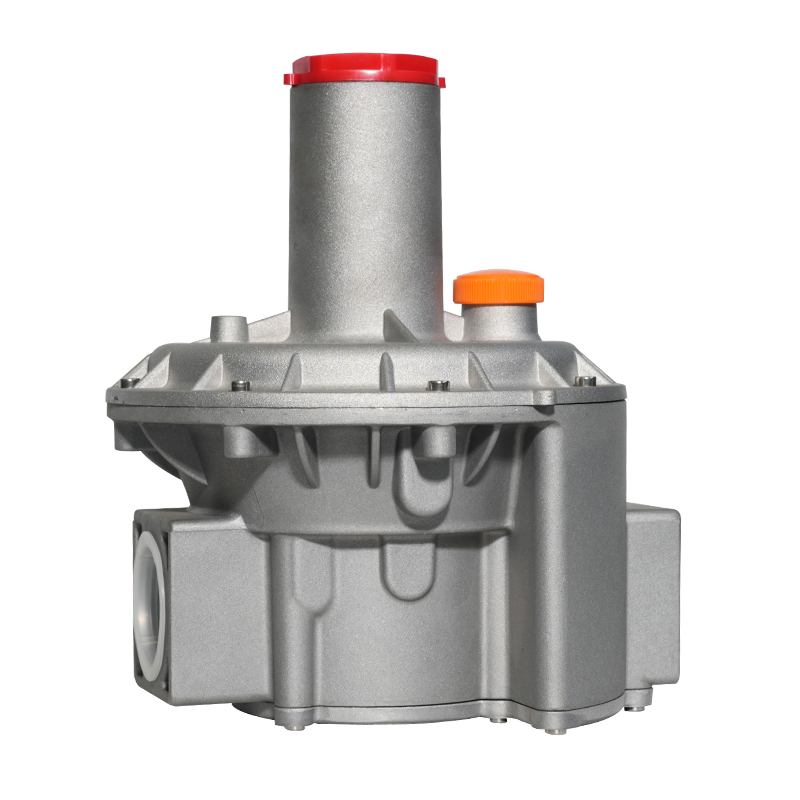
On top of the regulator body, you will find a threaded cap — usually plastic or brass — covering the adjustment screw. Remove the cap by hand or with a flat-head screwdriver. Beneath it is a slotted or hex adjustment screw bearing on the regulating spring.
Turn the screw clockwise to increase outlet pressure (compresses the spring). Turn counterclockwise to decrease it. Each quarter-turn typically changes output by 0.3 to 0.7 inches WC depending on the regulator model. Wait 30 seconds after each adjustment before reading the gauge — pressure takes time to stabilize.
Check pressure with all appliances off (no-load / lockup pressure) and with maximum demand running (full-load). The difference between the two readings should not exceed 1 inch WC for a healthy regulator. A larger swing indicates a worn diaphragm or seat.
Reinstall the adjustment cap firmly. Apply a gas leak detection solution to all connections. No bubbles should appear within 60 seconds. Document the final setpoint reading and date of adjustment in the maintenance log.
Signs Your Regulator Is Failing and Needs Replacement
A failing Natural Gas Pressure Regulator rarely fails suddenly — it degrades. Recognizing early symptoms prevents appliance damage and safety incidents.
Burners that produce a weak, yellow, or pulsing flame when they previously burned strong and blue often indicate under-pressure caused by a worn regulator seat or a clogged vent port.
If a furnace or water heater repeatedly triggers its high-temperature limit switch or flame sensor error, over-pressure from a failed regulator is a common root cause. Verify outlet pressure before replacing the appliance.
A diaphragm rupture allows gas to escape through the vent opening on top of the regulator body. If you detect a gas smell near the regulator, shut off supply immediately and replace the unit. This is not an adjustable condition.
A properly functioning regulator is silent when all appliances are off (lockup condition). Continuous hissing indicates the valve seat is not sealing — gas is bleeding past and over-pressurizing the downstream system.
Elastomer diaphragms harden and crack with age. Most manufacturers recommend replacing regulators every 15 to 20 years even without visible symptoms, particularly in outdoor installations exposed to UV, ozone, and temperature cycling.
Annual pressure testing is best practice. A downstream reading above 10 inches WC on a 7 in. WC system, or below 3.0 in. WC under normal load, indicates the regulator is no longer holding its setpoint reliably.
Key Specifications to Evaluate Before Purchasing
When selecting a replacement or new installation unit, these are the specification fields that matter most. Do not rely on physical size or connection thread size alone — two regulators that look identical can have very different pressure ranges and flow capacities.
| Specification | What to Check | Why It Matters |
| Inlet Pressure Rating (max) | Must exceed max upstream pressure | Prevents body failure under surge conditions |
| Outlet Pressure Setting | Factory setpoint and adjustment range | Must match appliance requirements |
| Capacity (BTU/hr or SCFH) | Sum of all connected appliance BTU ratings | Under-sized regulators cause pressure droop |
| Lockup Pressure | Max outlet pressure at zero flow | Should not exceed 125% of setpoint |
| Connection Size | NPT thread size (1/4 in. to 2 in. common) | Must match existing piping |
| Vent Orientation | Fixed or rotatable vent | Vent must face downward for outdoor installs |
| Body Material | Aluminum, zinc, or cast iron | Cast iron preferred for high-pressure industrial |
| Certifications | AGA / CSA / UL listed | Required for permitted installations |
A frequently overlooked specification is capacity. A residential regulator rated for 175,000 BTU/hr will perform well for a home with a 100,000 BTU furnace and a 75,000 BTU water heater running simultaneously. Adding a 60,000 BTU range to that system pushes total demand to 235,000 BTU/hr — beyond the regulator's capacity and a cause of persistent low-pressure complaints.


Contact Us