 English
 русский
 Español
 عربى
عربىGas automatic relief valve, gas relief valve, safety relief valve
The automatic gas relief valve is a safety device used to adjust the pressure in the gas system to ensure the stable operation of the system. The valv...
See Details


Request a Quote
Content
For operators sourcing oil and natural gas parts, the short answer is this: use alloy steels or nickel-based superalloys for corrosive environments, ensure components meet ASME pressure classes and API temperature ratings, and verify conformance to API 6A, 6D, and 5CT standards before installation. Every detail below backs that conclusion with data.
Corrosion is the leading cause of component failure in upstream and midstream operations. Choosing the wrong base material can cut service life from decades to months. The selection depends on three primary corrosives: H2S (sour service), CO2 (sweet corrosion), and chloride-laden brines.
ASTM A105 and AISI 4130 are workhorses for non-sour, moderate-temperature service up to 427 C (800 F). They are cost-effective but require internal coatings or inhibitor injection when CO2 partial pressure exceeds 0.05 MPa, where corrosion rates can reach 5 mm/year in untreated pipelines.
316L stainless (UNS S31603) handles mild chloride and CO2 service. For aggressive chloride environments above 60 C, duplex grades like SAF 2205 (UNS S31803) provide pitting resistance equivalent (PRE) values above 35, compared to 316L at approximately 24, cutting pitting risk by over 40%.
Inconel 625 and Hastelloy C-276 are the gold standard for high-temperature sour service. In wells with H2S above 0.003 MPa partial pressure (the NACE MR0175 threshold), these alloys maintain structural integrity at temperatures exceeding 260 C where 316L would suffer stress corrosion cracking within weeks.
Grade 5 titanium (Ti-6Al-4V) is specified for offshore riser components and subsea valves exposed to seawater brines. With a corrosion rate near zero in chloride environments and a strength-to-weight ratio three times that of steel, it justifies its premium cost in deepwater applications below 1,500 m.
| Material | Max Temp (C) | H2S Resistance | Chloride Resistance | Typical Application |
|---|---|---|---|---|
| AISI 4130 Low-Alloy Steel | 427 | Limited (NACE HRC 22 max) | Low | Wellhead bodies, valve stems |
| 316L Stainless Steel | 870 | Moderate | Moderate (PRE ~24) | Tubing fittings, heat exchangers |
| Duplex 2205 | 300 | Good | High (PRE ~35) | Subsea manifolds, flowlines |
| Inconel 625 | 980 | Excellent | Excellent | Sour gas completions, downhole tools |
| Titanium Gr.5 | 315 | Excellent | Excellent | Offshore risers, subsea valves |
Ratings are not suggestions. An undersized component in a high-pressure gas injection line is a catastrophic failure waiting to happen. API and ASME jointly define the benchmarks the industry relies on.
API 6A defines six working pressure ratings for wellhead and Christmas tree components: 2,000 psi, 3,000 psi, 5,000 psi, 10,000 psi, 15,000 psi, and 20,000 psi. Ultra-deepwater applications and high-pressure high-temperature (HPHT) wells increasingly demand the 20,000 psi class. The Macondo well that led to the 2010 Deepwater Horizon disaster operated at approximately 11,900 psi -- a range where many legacy 10,000-psi components were dangerously close to their rated limits.
ASME B16.5 governs flanges and fittings from Class 150 (285 psi at 38 C) up to Class 2500 (6,170 psi at 38 C). As temperature rises, allowable pressure drops. A Class 600 flange rated at 1,480 psi at 38 C is only rated at 570 psi at 538 C -- a 61% reduction. Engineers must account for this derating in high-temperature process lines.
API 6A assigns temperature ratings from Class L (-75 F to 180 F / -60 C to 82 C) for Arctic environments up to Class V (-75 F to 350 F / -60 C to 177 C) for high-temperature surface equipment. HPHT wells that exceed 177 C require supplemental engineering review under API 17TR8, the dedicated HPHT guidance document. Deepwater wellheads additionally must survive installation at seabed temperatures as low as 2 C while the produced fluid may exceed 150 C -- a thermal gradient that drives material fatigue if not addressed in design.
API compliance is not a marketing checkbox. It is a documented, auditable process involving design validation, material traceability, third-party inspection, and recurring quality audits. Here is how the key standards work in practice.
Covers wellheads and Christmas tree equipment. Manufacturers must document design validation tests including hydrostatic shell tests at 1.5x rated working pressure and seat/seal tests at 1.1x rated pressure. Material traceability via mill certificates is mandatory for every heat of steel used. Third-party API monogram licensing requires on-site audits every three years.
Governs pipeline valves. It requires shell test at 1.5x pressure, seat leakage test at rated pressure, and operational torque testing. For gas service, leakage is measured in cubic centimeters per minute per inch of bore -- a far tighter standard than liquid-only tests. API 6D also mandates functional testing of actuators if supplied as an assembly.
Specifies requirements for casing and tubing used in oil and gas wells. Grade designations (H40, J55, L80, P110, Q125) correspond to minimum yield strengths in thousands of psi. Each grade has mandatory chemistry limits, heat treatment, and mechanical testing requirements. Non-destructive evaluation (NDE) including electromagnetic inspection is required for premium grades.
While not an API standard, this NACE/ISO specification is referenced by API 6A for all sour service equipment. It restricts hardness (HRC 22 max for most carbon steels), prohibits certain material-environment combinations, and mandates SSC (sulfide stress cracking) resistance testing via four-point bend or C-ring specimens in NACE TM0177 test solutions.
Bearing the API monogram means a manufacturer has been independently audited and licensed to apply that mark. The license covers a specific product scope -- a valve manufacturer licensed for API 6D cannot automatically mark wellhead components under API 6A. Operators should verify license validity at api.org/certification, as licenses can be suspended or revoked following audit findings. In 2023, the API monogram database listed over 800 active licensees globally, but historical suspension records show approximately 5 to 8% of audits result in corrective action requirements.
Combining material, rating, and compliance requirements into a procurement decision can be complex. This checklist covers the critical verification points before ordering any pressure-containing component:
Material choice, pressure/temperature ratings, and API compliance are interdependent decisions. A nickel alloy component rated for 20,000 psi that lacks an API 6A monogram certificate is commercially and legally insufficient for most operator qualification requirements. Conversely, a properly monogrammed carbon steel valve in a sour H2S environment without NACE compliance will fail prematurely regardless of its rated pressure class.
The most effective procurement strategy pairs well-specific fluid analysis data with a material selection matrix referenced to NACE MR0175, verifies pressure class against ASME derating curves for the operating temperature range, and confirms API monogram validity through the official registry before purchase order issuance. Oil and natural gas parts sourced through this disciplined process deliver the service life and safety margins that modern operations demand.
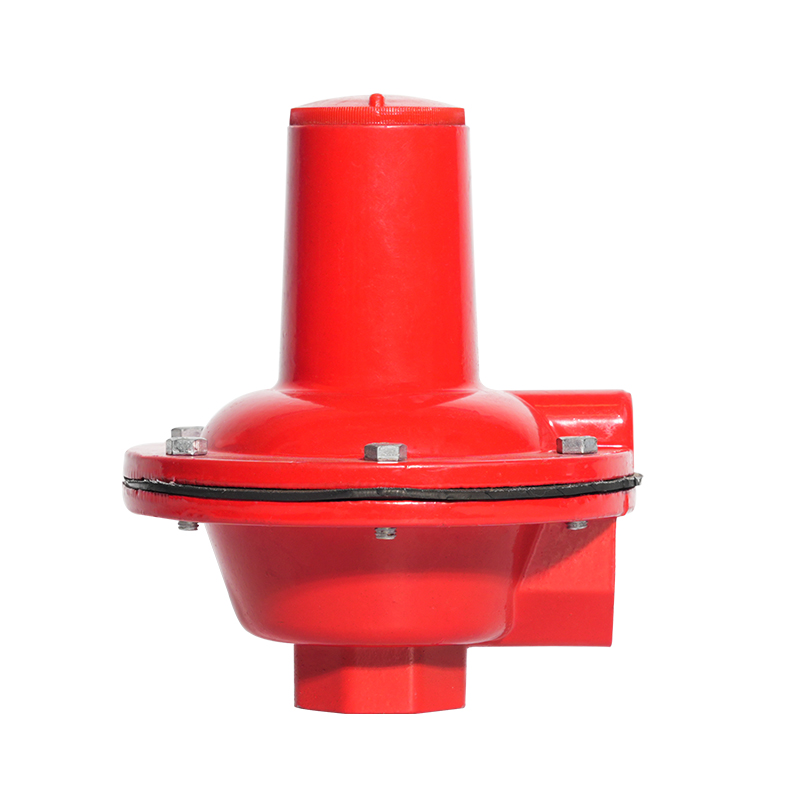
The automatic gas relief valve is a safety device used to adjust the pressure in the gas system to ensure the stable operation of the system. The valv...
See Details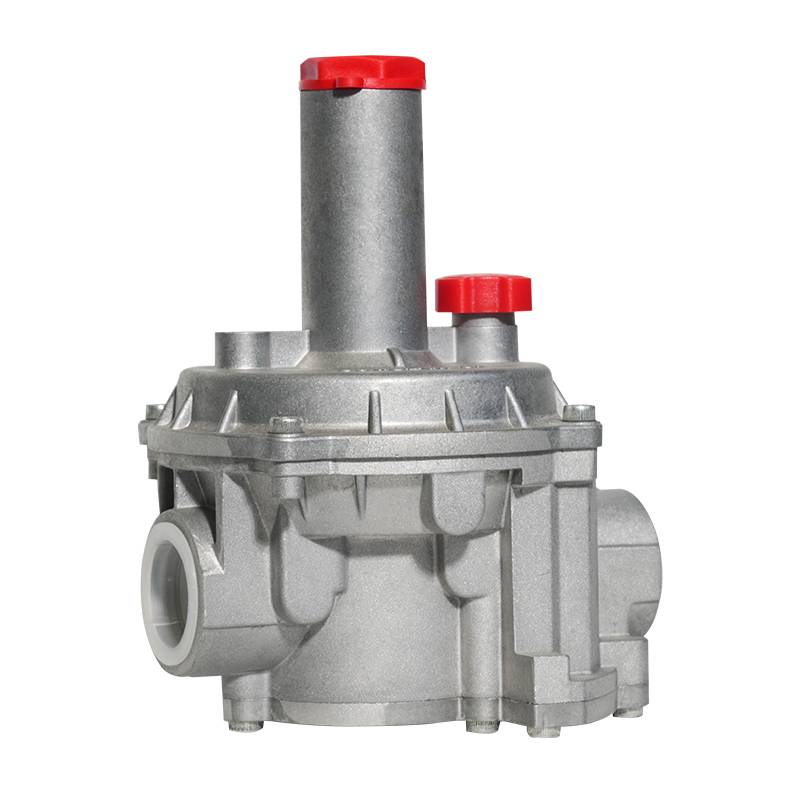
Industrial gas pressure regulating valve pressure reducing valve, pressure stabilizer is a device used to regulate and stabilize gas pressure. It can ...
See Details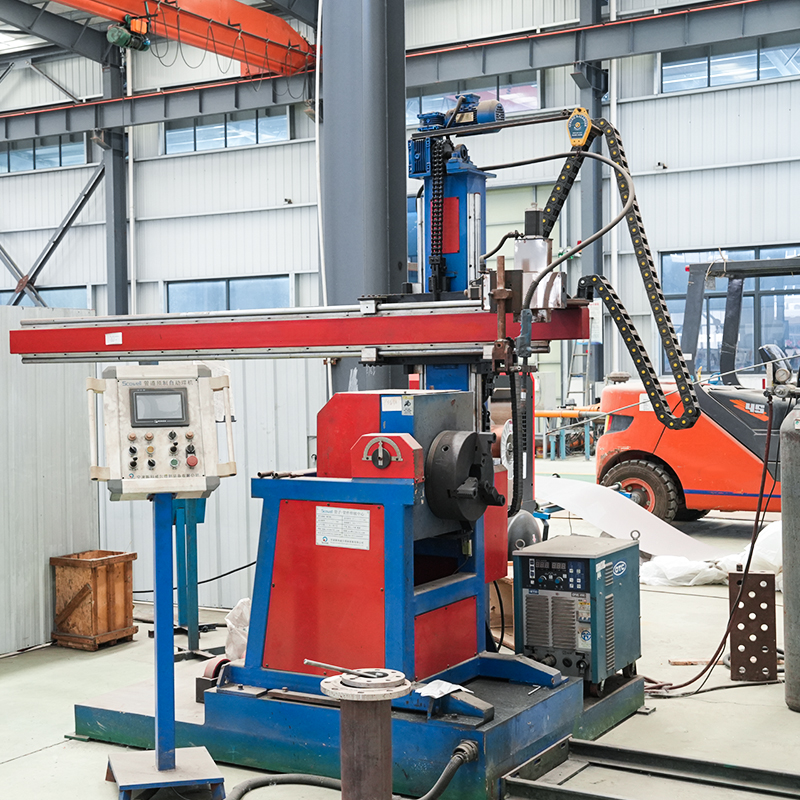
The fully automatic gas shielded welding machine is an automatic welding equipment based on advanced control technology. It combines motor control, si...
See Details
The company is a manufacturer specializing in gas transmission and +distribution equipment and gas pressure regulators. It is a professional manufacturer integrating the research and development, design, manufacturing, marketing and after-sales service of gas equipment.
Phone: +86 138-5131-2088
Tel: +86 0515-83918669
Email: [email protected]
Add: No. 13, Yongchuang Road, Dazhong Industrial Park, Dafeng District, Yancheng City, Jiangsu Province, China
Copyright © Jiangsu Changrun Intelligent Gas Equipment Co., Ltd All Rights Reserved.
Custom Smart Gas Pressure Regulators Manufacturers, Suppliers
 Login
Login
Contact Us