 English
 русский
 Español
 عربى
عربىNatural gas pressure reducing valve, gas pressure regulator
Industrial LPG pressure regulator, also known as industrial LPG pressure regulator, is divided into high pressure and low pressure. This pressure regu...
See Details


Request a Quote
Content
A natural gas pressure regulator is expected to hold outlet pressure steady while inlet pressure and downstream demand change. At a large city gate station, that can mean taking 2.5 MPa from the transmission line and delivering 0.4 MPa to the urban network. At a wall-mounted building regulator, the same task happens at a much smaller scale: reducing a few hundred kilopascals down to the 2 to 3 kPa that domestic burners are designed for. The conclusion is straightforward: the natural gas pressure regulator is not a passive flow-control accessory. It is an active protective component in the gas train. If it is wrongly selected, the result is not reduced comfort but downstream overpressure or supply interruption.
Operationally, a regulator reacts to the difference between actual outlet pressure and the set point determined by spring compression. Outlet pressure acts on a diaphragm, which pushes against the spring. If downstream demand rises and pressure drops, the spring extends, the valve seat opens wider, and more gas flows. If pressure builds up, the diaphragm compresses the spring, the seat closes down, and flow decreases. This mechanical feedback loop needs no electricity, which makes the regulator reliable even during a utility outage.
Direct-operated regulators, where outlet pressure acts directly on the diaphragm, are simple, compact, and well suited to small commercial and residential installations. Their control precision is limited, however. As flow increases, most direct-operated designs show droop: outlet pressure falls below the set point. When flow stops, they show lock-up pressure above the set point. These deviations are acceptable in many applications, but they matter in industrial processes.
Pilot-operated regulators solve that problem. A small pilot valve senses outlet pressure and uses line pressure to position a much larger main diaphragm. The gain is higher, so the regulator holds closer to its set point across a wide flow range. In gate station and industrial duties, pilot-operated units can maintain outlet pressure within 1% to 2.5% of the set point, which makes them the usual choice where combustion efficiency and process stability are essential.
Lock-up pressure is a practical, often-overlooked performance value. When downstream demand falls to zero, every regulator closes at a pressure slightly above its set point. Consider a service regulator set to 2.1 kPa. If lock-up reaches 3.1 kPa, that is a 1 kPa deviation, enough to affect equipment with a low pressure rating. So it is not enough to ask what the set point is; the specification must be checked for lock-up pressure and accuracy class as well.
Accuracy class is typically expressed as AC5, AC10, or similar values in regulator standards, meaning outlet pressure stays within that percentage of the set point across the defined flow envelope. For a regulator set to 300 kPa, an AC10 unit could theoretically deviate by as much as 30 kPa under certain flow conditions. For this reason, accuracy class should be selected in the same way as the pressure rating: it is a safety parameter, not a laboratory refinement. These performance values, taken together, explain the working principle and safety importance of natural gas pressure regulators in real operating conditions.
A gas distribution system relies on regulators at multiple pressure stages. Transmission lines typically operate at 4 to 8 MPa. City gate stations reduce this to medium pressure, usually 0.4 to 1.6 MPa. District regulators, sometimes built as compact pressure-regulating cabinets, bring the pressure down to a few kilopascals for residential and small commercial service. The same product family, the natural gas pressure regulator, appears at each stage, but with very different construction and control mechanisms.
When the downstream load is an industrial furnace, a boiler, or a CNG fueling station, the regulator is often paired with a meter run, a filter, and a slam-shut valve. When it serves a residential building, it may be a wall-mounted unit with an integrated safety relief. What connects these scenarios is the requirement that downstream pressure never exceeds the rating of the pipes, hoses, seals, and burners connected to the outlet. A regulator that drifts, or a set point that shifts after installation, creates risks that compound over time, which is exactly why understanding how a natural gas pressure regulator improves the safety of the natural gas supply system matters before the specification is written.
A reliable gas system is not built around a single regulator. It is built around a hierarchy: a working regulator, a monitor regulator on critical stations, a slam-shut valve for overpressure events, and a relief valve or vent line for residual overpressure. Each element has a defined failure envelope. The four key functions that improve system reliability (pressure reduction, pressure stabilization, overpressure containment, and flow limiting) are delivered by different combinations of valves depending on the station type and the downstream load.
Selection starts with defining the pressure boundaries. The maximum inlet pressure of the regulator must exceed the highest pressure that can appear at its upstream connection, including a possible upstream valve failure. The outlet pressure setting should sit comfortably within the available spring range. A rule of thumb that works in most applications is to keep the set point between 30% and 70% of the spring range; springs become nonlinear near both ends, which makes accurate setting and stable operation harder.
Every regulator has a rated capacity, usually stated in Nm3/h at a specific inlet pressure and outlet pressure. Capacity alone is misleading, though. The turndown ratio, meaning maximum controllable flow divided by minimum controllable flow, determines whether the unit will handle both peak demand and overnight near-zero load. If a station supplies a large industrial customer during the day and a very small pilot flame at night, a fixed spring regulator may not control well at the low end.
In that situation, options include using a smaller parallel regulator for low flow, or selecting a pilot-operated design with a wider operating range. For many medium and large installations, a natural gas pipeline pressure regulator from the gas-pressure-regulator family offers a practical answer because it combines a wide turndown with stable lock-up pressure.
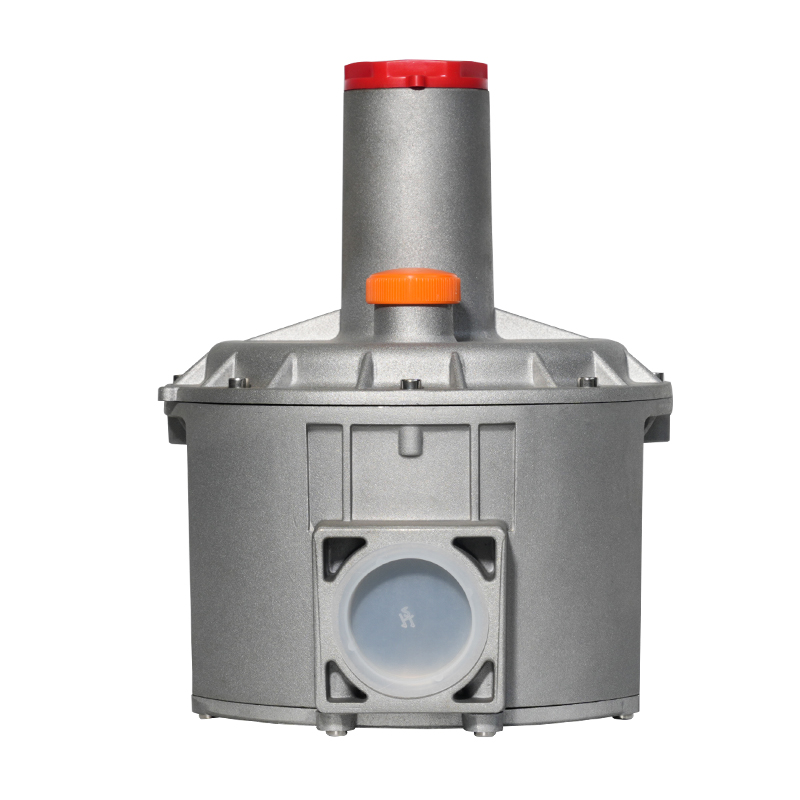 Natural And Pipeline Gas Pressure Regulators SuppliersJiangsu Changrun Is China Custom Pipeline Gas Pressure Regulators And Natural Gas Pressure Regulator Suppliers, Manufacturers, Offer Desi...View Product →
Material selection affects both service life and safety. For standard natural gas, a NBR diaphragm is widely used, but at low temperatures or with gas containing heavier hydrocarbons, a fluororubber diaphragm may be necessary. The valve body must also be compatible with the rated inlet pressure and with the installation environment, especially if the regulator is mounted outdoors.
Temperature resilience deserves more attention than it usually gets. In cold regions, a regulator in an unheated box can see frost forming on the diaphragm and valve stem, changing the set point and increasing the risk of lock-up at an incorrect pressure. Multi-stage regulation is one way to reduce the pressure drop per stage, which lowers the cooling caused by expansion. The regulator must be rated for the minimum ambient temperature of the site, and its materials must not become brittle at that temperature.
| Parameter | Typical Value | Practical Note |
|---|---|---|
| Maximum inlet pressure | 0.4 to 8 MPa | Must cover worst-case upstream pressure |
| Outlet pressure range | 2 kPa to 1.6 MPa | Set point should sit in the middle of spring range |
| Accuracy class | AC5 to AC20 | Tighter class needed for industrial loads |
| Turndown ratio | 10:1 to 50:1 | Higher ratio gives better low-flow control |
| Working temperature | -20 °C to 60 °C | Cold sites may require dedicated diaphragm material |
An industrial user often needs accurate pressure under rapidly varying flow. An industrial gas pressure regulator with pressure-reducing valve control is designed for that service class, with a larger diaphragm area and heavier construction. In a building service line, by contrast, the priority is compact size, tight lock-up, and integration with a relief valve; a simpler self-operated regulator is often the correct choice. Matching the regulator type to the demand profile and the safety philosophy of the network is far more valuable than simply choosing a larger frame size.
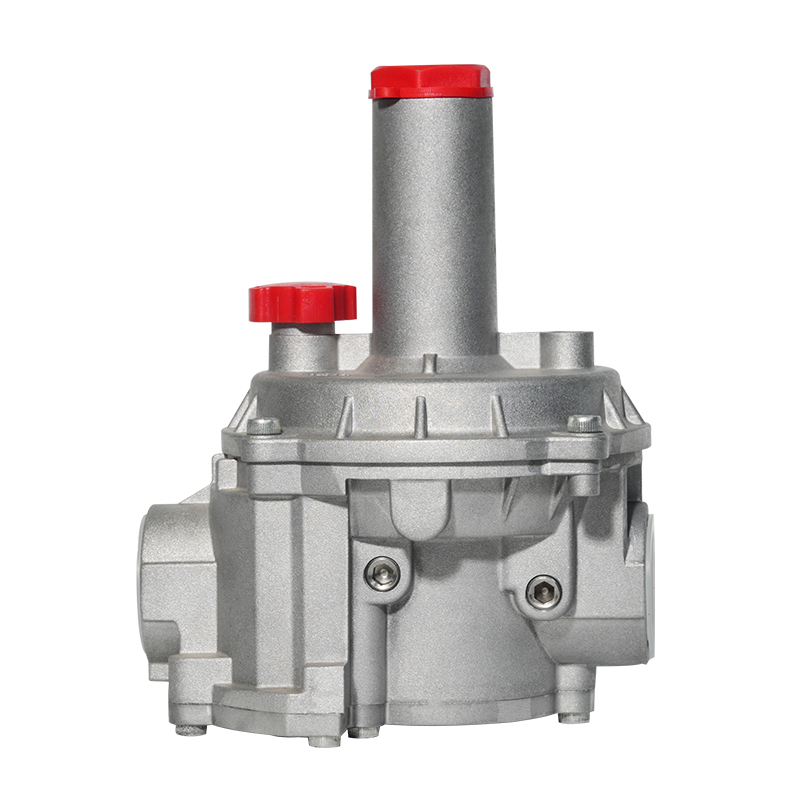 Custom Industrial Lng Pressure Reducing Regulator SuppliersAs China Custom Industrial Lng Pressure Reducing Regulator Suppliers And Manufacturers, Jiangsu Changrun Design Customization Industrial ...View Product →
No natural gas pressure regulator is a standalone safety device. It reduces pressure, but it cannot react fast enough to every failure, and it cannot protect the downstream system when its own internals fail. That is why safety components are coordinated with the regulator:
Filter maintenance is an underestimated part of regulator reliability. When a filter is blocked, the differential pressure across it increases, the inlet pressure available to the regulator drops, and the regulator may open further to hold outlet pressure while recovering less and less of its actual capacity. In practice, a clean filter is one of the cheapest ways to keep a natural gas pressure regulator within its design envelope.
Installation quality directly determines how close the regulator stays to its certified performance. The regulator should be installed with an upstream isolation valve, a downstream pressure gauge, and enough straight pipe on the inlet side to ensure stable flow. Downstream piping should be supported so its weight is not borne by the regulator body. For cabinet-mounted distribution equipment, accessibility for maintenance is part of the design; a regulator that cannot be reached easily will not be inspected properly.
Commissioning involves more than checking the set point. The station should be tested for lock-up pressure, the slam-shut valve should be tripped and reset, and the relief valve should be confirmed to relieve at the correct pressure. A practical way to verify regulator performance before delivery is to run it on a static characteristic test bench, which records the outlet pressure versus flow curve and exposes droop, hunting, and lock-up issues.
The inspection interval depends on the gas quality, the duty cycle, and the criticality of the station, but in general it should include:
When replacing an aging unit, check the existing inlet pressure rating, spring range, and connection size before ordering. A common field mistake is to install a regulator with the same body size but a wider spring range than the original, which worsens accuracy and can create control instability. If the original unit has operated satisfactorily for years, the safest replacement is often a model with the same operating characteristics. A natural gas pressure reducing valve and gas pressure regulator that matches the original set-point range and accuracy class will minimize re-engineering of the piping and control system.
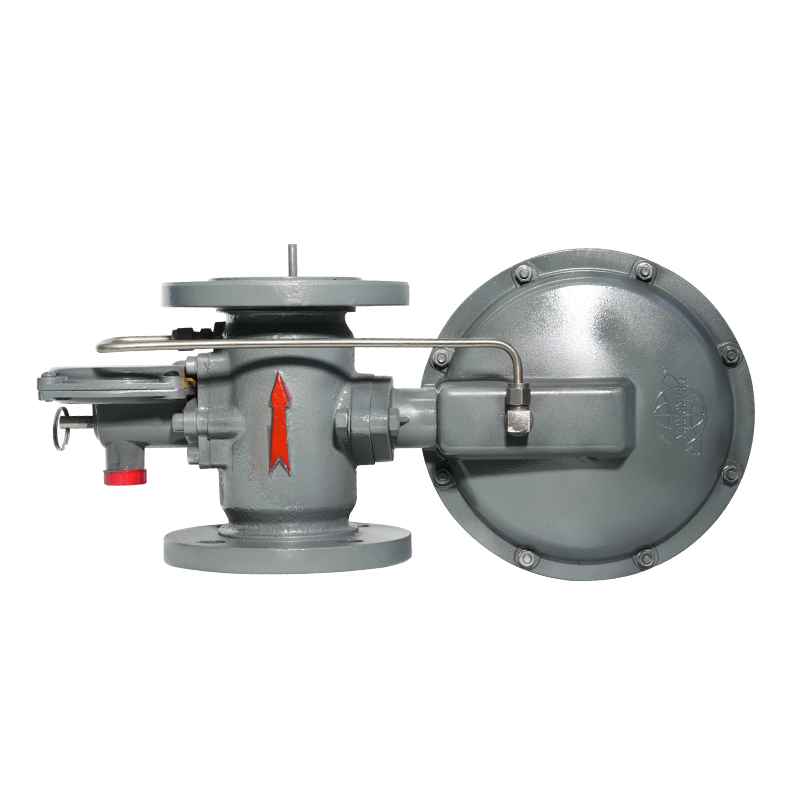 Custom Design Natural gas pressure reducing valve, gas pressure regulator SuppliJiangsu Changrun Intelligent Gas Equipment Co., Ltd. is China Custom Design Natural gas pressure reducing valve, gas pressure regulator S...View Product →
A natural gas pressure regulator becomes reliable only when it is correctly sized, correctly protected, and correctly maintained. The best product will not compensate for a blocked filter, a misapplied spring, or a downstream system that is never tested. Treat the selection as a system engineering decision: define the upstream pressure range, the downstream tolerance, the flow profile, and the safety devices around the unit. When those elements are aligned, the natural gas pressure regulator can be the most dependable component in the entire gas supply chain.
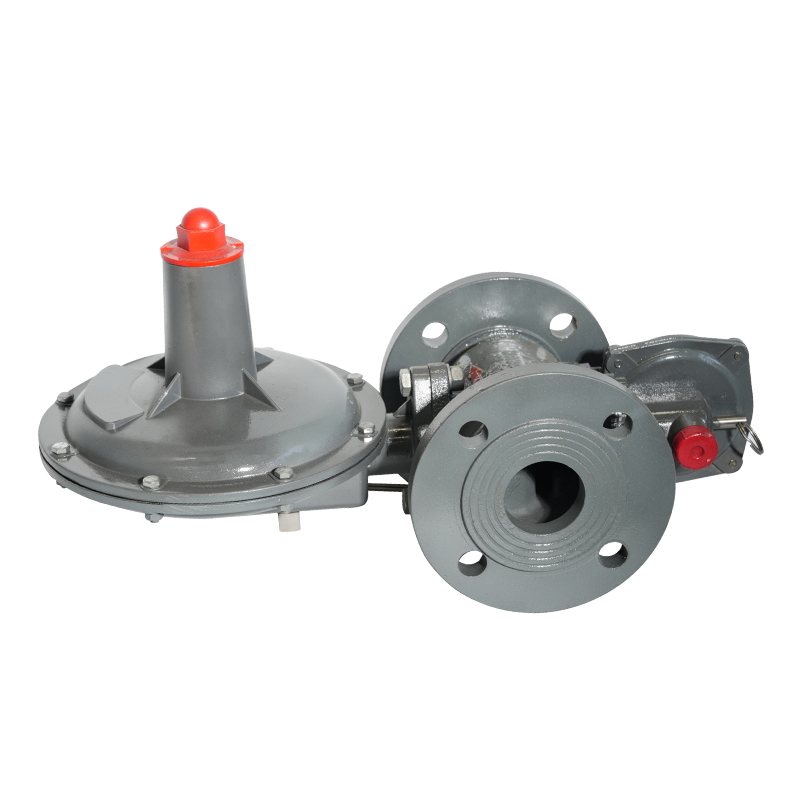
Industrial LPG pressure regulator, also known as industrial LPG pressure regulator, is divided into high pressure and low pressure. This pressure regu...
See Details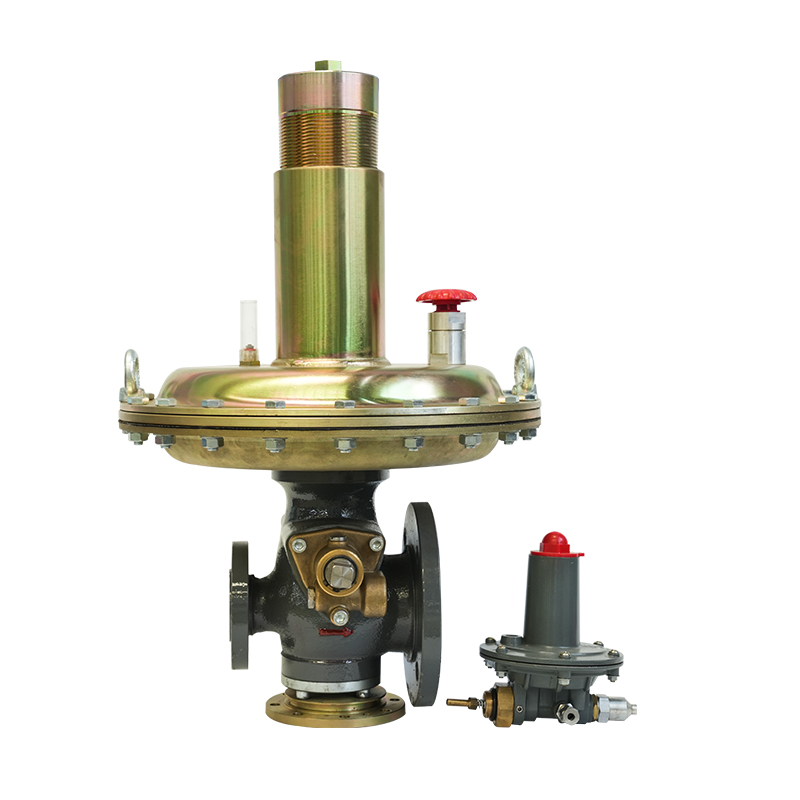
The gas pressure regulator is a key device to maintain the stability of the downstream pressure of the gas pipeline. It automatically changes the gas ...
See Details
High-purity natural gas/liquefied gas production machinery and equipment focuses on the production of high-quality and high-efficiency natural gas and...
See Details
The company is a manufacturer specializing in gas transmission and +distribution equipment and gas pressure regulators. It is a professional manufacturer integrating the research and development, design, manufacturing, marketing and after-sales service of gas equipment.
Phone: +86 138-5131-2088
Tel: +86 0515-83918669
Email: [email protected]
Add: No. 13, Yongchuang Road, Dazhong Industrial Park, Dafeng District, Yancheng City, Jiangsu Province, China
Copyright © Jiangsu Changrun Intelligent Gas Equipment Co., Ltd All Rights Reserved.
Custom Smart Gas Pressure Regulators Manufacturers, Suppliers
 Login
Login
Contact Us