 English
 русский
 Español
 عربى
عربىNatural gas valve pressure regulator gas regulating valve
LPG Pressure Regulator Industrial gas pressure regulator is a key device to ensure the safe use of gas. This regulating valve is mainly used to contro...
See Details


Request a Quote
Content
In a gas test loop, a few grams of welding scale can be enough to jam a flow meter, score a regulator seat, or make a prototype gas train fail its endurance test. That is why R&D engineers and skid builders put a Y-type strainer directly upstream of sensitive equipment. When the specification says a PN16 DN50/DN80 flanged ductile iron Y-type strainer, it means a body rated for 16 bar, a nominal line bore of 50 or 80 mm, flanged connections, and a ductile iron body that can cope with real-world piping loads.
The short version is straightforward: for most R&D gas applications, this is a reliable, repairable and cost-effective filter. The remaining work is choosing the correct mesh, checking the pressure drop at the design flow, and mounting the strainer so maintenance stays simple.
Each part of the product name carries a practical meaning for an engineer who is specifying a strainer for a test bench, pilot skid, or gas pressure regulating assembly.
| Parameter | Typical value / consideration |
|---|---|
| Nominal pressure | PN16, meaning 16 bar working pressure at ambient temperature |
| Nominal sizes | DN50 and DN80, the common sizes for R&D loops and small process lines |
| Body material | Ductile iron, selected for strength and resistance to pipeline stress |
| End connection | Flanged ends for repeatable installation and easy removal |
| Strainer element | Stainless steel mesh or perforated screen, with opening size matched to the application |
| Servicing | Bolted cover and screen chamber that can be cleaned without cutting the line |
PN16 is the nominal pressure rating of the body, cover, and flange set: 16 bar, or 1.6 MPa, at room temperature. For dry natural gas, LPG vapour, nitrogen, and many compressed air systems, that covers the typical working range. The rating only means something if the cover bolts, gasket, and flange faces are also rated for the same pressure class. Ask for the strainer body and flanges to be supplied to the same PN16 pressure boundary, rather than assuming the connection will match the pipework.
Ductile iron is preferred over grey cast iron in flanged strainer designs because it resists distortion and cracking when the piping transmits bending, vibration, thermal expansion, or poor pipe support loads. A grey cast iron body may pass a hydrostatic test, but it can crack at a bolt ear or flange lug during tightening. Ductile iron behaves more predictably under the uneven loads that appear during installation and long-term operation.
This is why our PN16 DN50/DN80 flanged ductile iron Y-type strainer uses a ductile iron body with a bolted cover, rather than a brittle grey iron body with a simple threaded plug. The bolted cover also gives maintenance staff quick access to the screen without removing the entire strainer from the pipe.
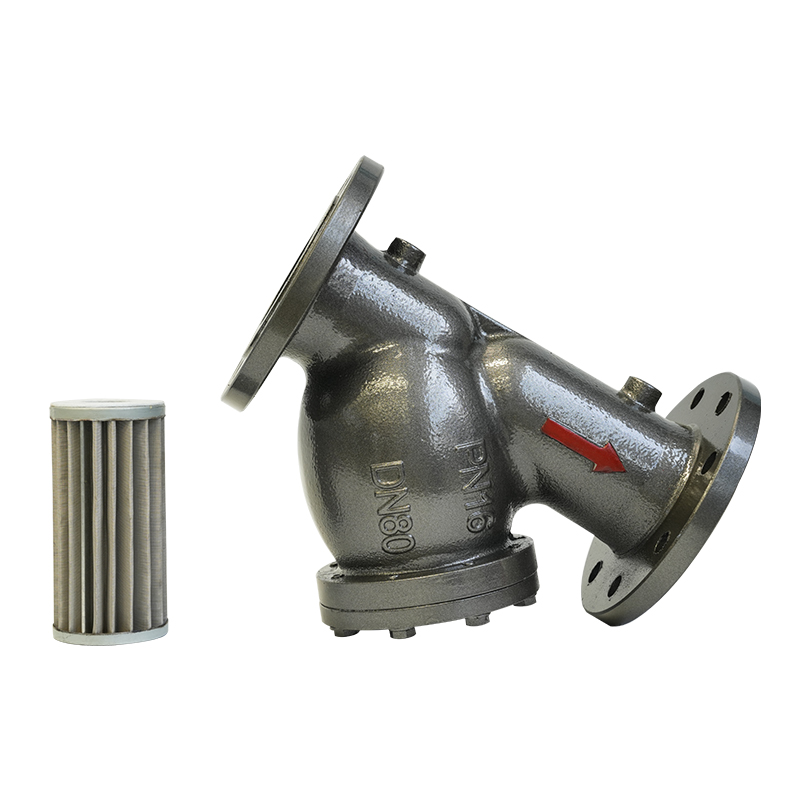 Custom High Pressure Y Type Strainer Suppliers, ManufacturersAs China Custom High Pressure Y Type Strainer Suppliers, Manufacturers, Jiangsu Changrun Offer Design PN16 DN50/DN80 flanged ductile iron...View Product →
Research and development loops are different from long-term production lines. They are reconfigured frequently, run at varying flows, loaded with temporary instrumentation, and subjected to repeated start-stop cycles. In this environment, the strainer has one clear job: protect pumps, flow meters, valves, and regulators from debris that remains inside the pipe after welding, flushing, or assembly.
For a closer look at how flange geometry, screen direction, and flow path interact, review the key considerations for filtration efficiency and precision.
The mesh opening should be fine enough to protect downstream equipment, but coarse enough to keep pressure loss acceptable. For normal gas service that has to catch rust, mill scale, welding slag, and thread sealant, a 20 to 60 mesh screen, roughly 250 to 850 micrometre openings, is a common starting point. Finer protection for a flow meter or analytical instrument may justify a secondary filter downstream instead of turning the Y-type strainer into a dust collector.
Do not rely on the mesh number alone. Wire diameter, mesh weave, and the support structure under the screen all affect the effective filtration size and the pressure drop. The calculation method is worth reviewing before you settle on a screen specification: how to design the mesh of a PN16 DN50/DN80 filter explains the practical relationship between opening size, open area, and flow capacity.
Select a stainless steel screen, typically SS304 or SS316, for the strainer element. The screen also needs enough mechanical strength to withstand the differential pressure that builds up when it is partially blocked. A collapsed screen under clogged conditions is a common failure, and it usually becomes visible only after the downstream regulator or meter has already been damaged.
A PN16 flanged Y-type strainer is a forgiving component, but installation mistakes will reduce its value. Place the strainer in a straight run, close enough to the protected equipment to catch debris before it reaches a valve seat or meter rotor. On a horizontal line, the Y branch should point downward; on a vertical line, the flow direction should be downward through the screen so that debris collects in the screen chamber.
The long-term benefit is simple: reliable protection that reduces unplanned downtime. In maintenance terms, a flanged Y-type strainer can effectively extend the service life of equipment because it stops particles before they reach precision internal parts.
When buying, confirm the flange drilling standard, face-to-face dimensions, cover gasket material, mesh grade, and the type of drain or blowdown connection. A PN16 rating by itself is not enough. The bolt circle and flange face must match the connecting pipework; in some projects that means AS2129 Table E, AS4087 PN16, or an equivalent regional standard. The extra check takes a few minutes on the datasheet and prevents a very frustrating fit-up at the test skid.
For R&D loops, pilot skids, and gas pressure regulating assemblies, a PN16 DN50/DN80 flanged ductile iron Y-type strainer is one of the simplest ways to protect downstream instrumentation and control devices. Decide the mesh opening based on the smallest particle that can damage the equipment, check the pressure drop at both minimum and maximum flow, and mount the strainer where it can be opened and cleaned without a struggle.
Once those application details are fixed, the rest of the specification follows proven industrial practice. The product itself is mature; the installation and screen selection are what make it work.
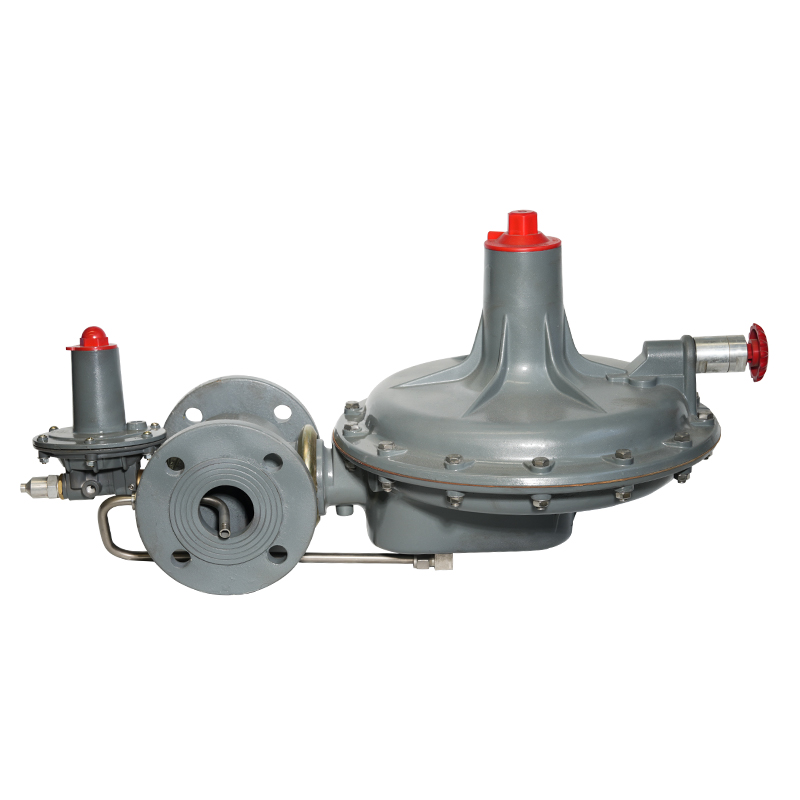
LPG Pressure Regulator Industrial gas pressure regulator is a key device to ensure the safe use of gas. This regulating valve is mainly used to contro...
See Details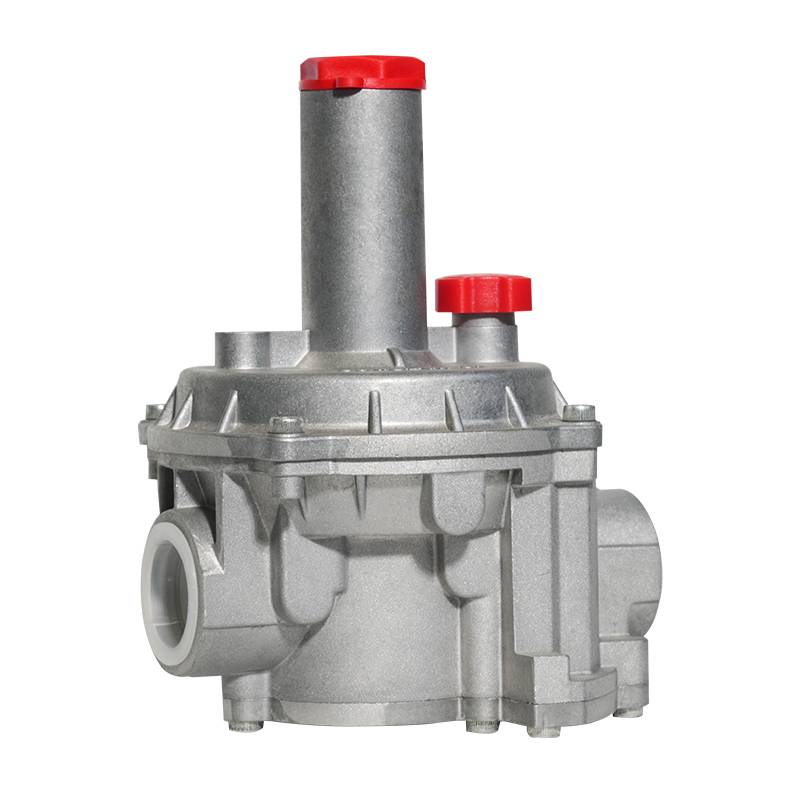
Industrial gas pressure regulating valve pressure reducing valve, pressure stabilizer is a device used to regulate and stabilize gas pressure. It can ...
See Details
A liquefaction plant is a device that converts gas into liquid, especially in the production of liquefied natural gas (LNG). LNG plant specifically re...
See Details
The company is a manufacturer specializing in gas transmission and +distribution equipment and gas pressure regulators. It is a professional manufacturer integrating the research and development, design, manufacturing, marketing and after-sales service of gas equipment.
Phone: +86 138-5131-2088
Tel: +86 0515-83918669
Email: [email protected]
Add: No. 13, Yongchuang Road, Dazhong Industrial Park, Dafeng District, Yancheng City, Jiangsu Province, China
Copyright © Jiangsu Changrun Intelligent Gas Equipment Co., Ltd All Rights Reserved.
Custom Smart Gas Pressure Regulators Manufacturers, Suppliers
 Login
Login
Contact Us